Illustrated Novella · Concept Album
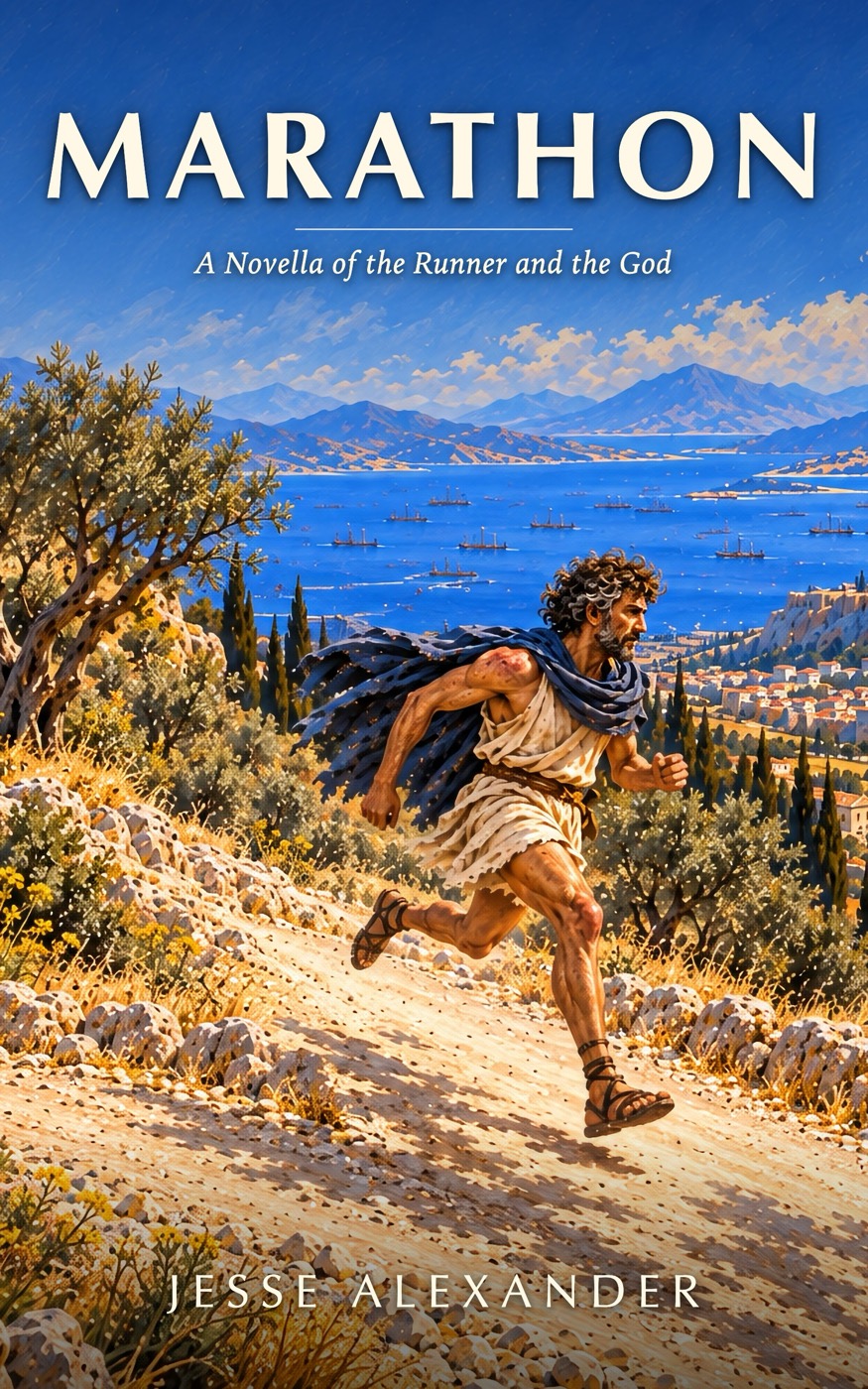
MARATHON
Three hundred miles. Four days. One god at his shoulder.
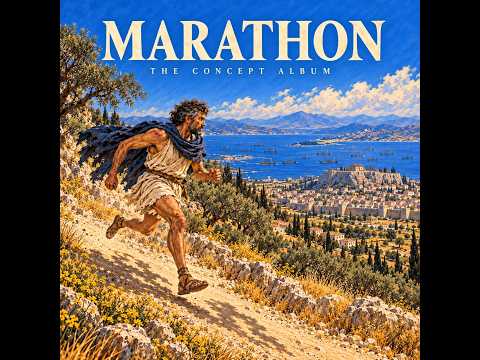
Album on YouTubeIllustrated novella42 painted plates26-track concept album
Three hundred miles. Four days. One god at his shoulder.
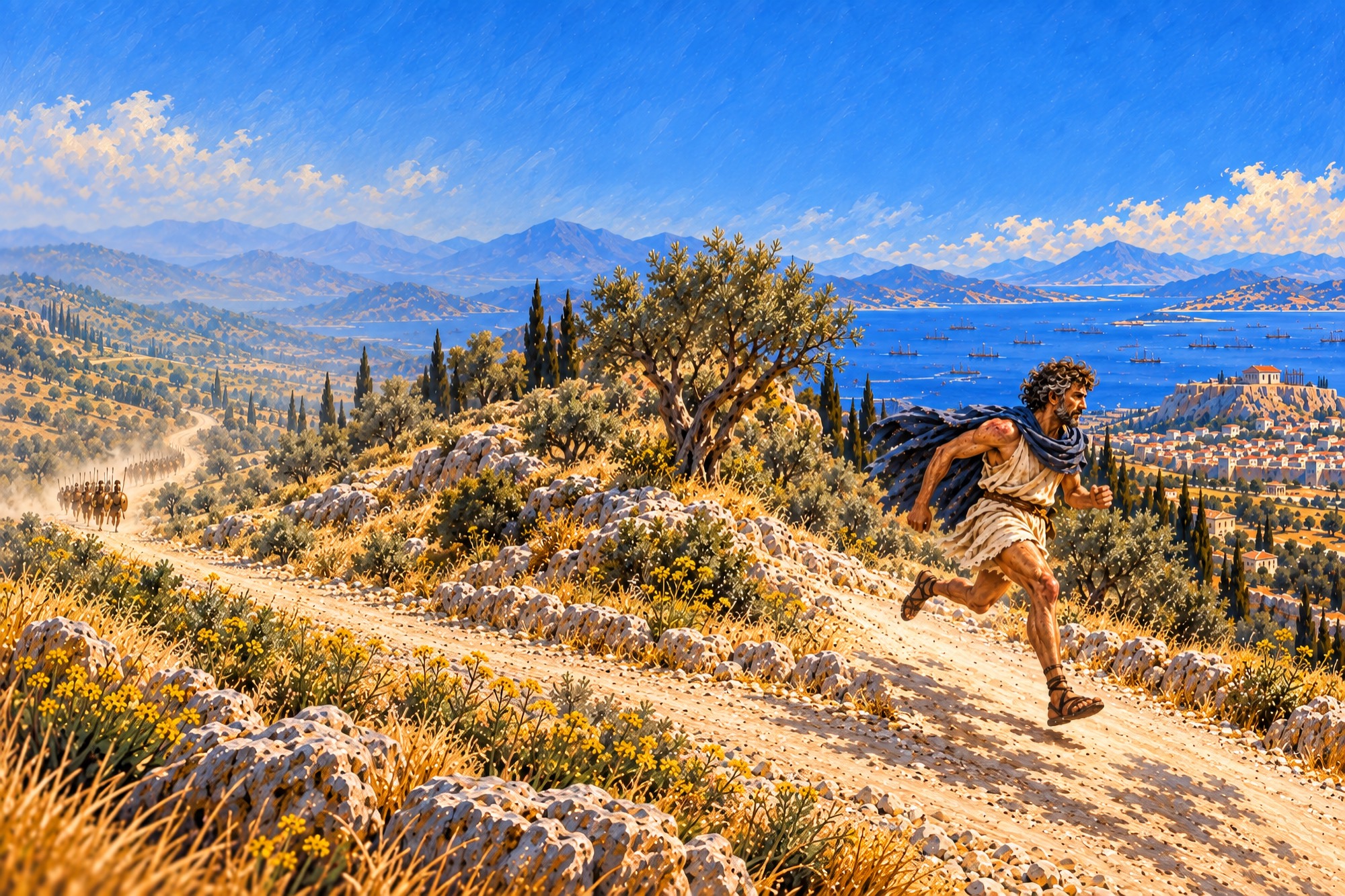
490 BC. Six hundred Persian ships darken the bay of Marathon, and Athens, a democracy barely old enough to shave, has one hope: Sparta, a hundred and fifty miles away over the mountains.
The man they send is forty, disgraced, and half out of his mind with poppy and prayer. Pheidippides was the fastest runner in Greece once. Now he tends a forgotten shrine in a cave and is pelted in the streets for preaching gods nobody believes in. His wife is tired to death of loving him. His sons, a soldier and a clerk of the new democracy, are ashamed of him. Only his daughter, twelve years old and never without her bow, still thinks he hung the moon.
The Great King's hunters are on his trail. A traitor sits at his own family's table with a polished shield and a plan. And on the snowbound pass of Parthenion, something with horns and a wicked grin falls into step beside him and offers a bargain: fail, and the old gods live.
From the olive groves of Athens to the bare hall of the Spartan Ephors, from the burning streets of Sardis to the fennel field where ten thousand citizens charged an empire at a run, MARATHON is a full-blooded mythic adventure, told in a voice made to be read aloud.
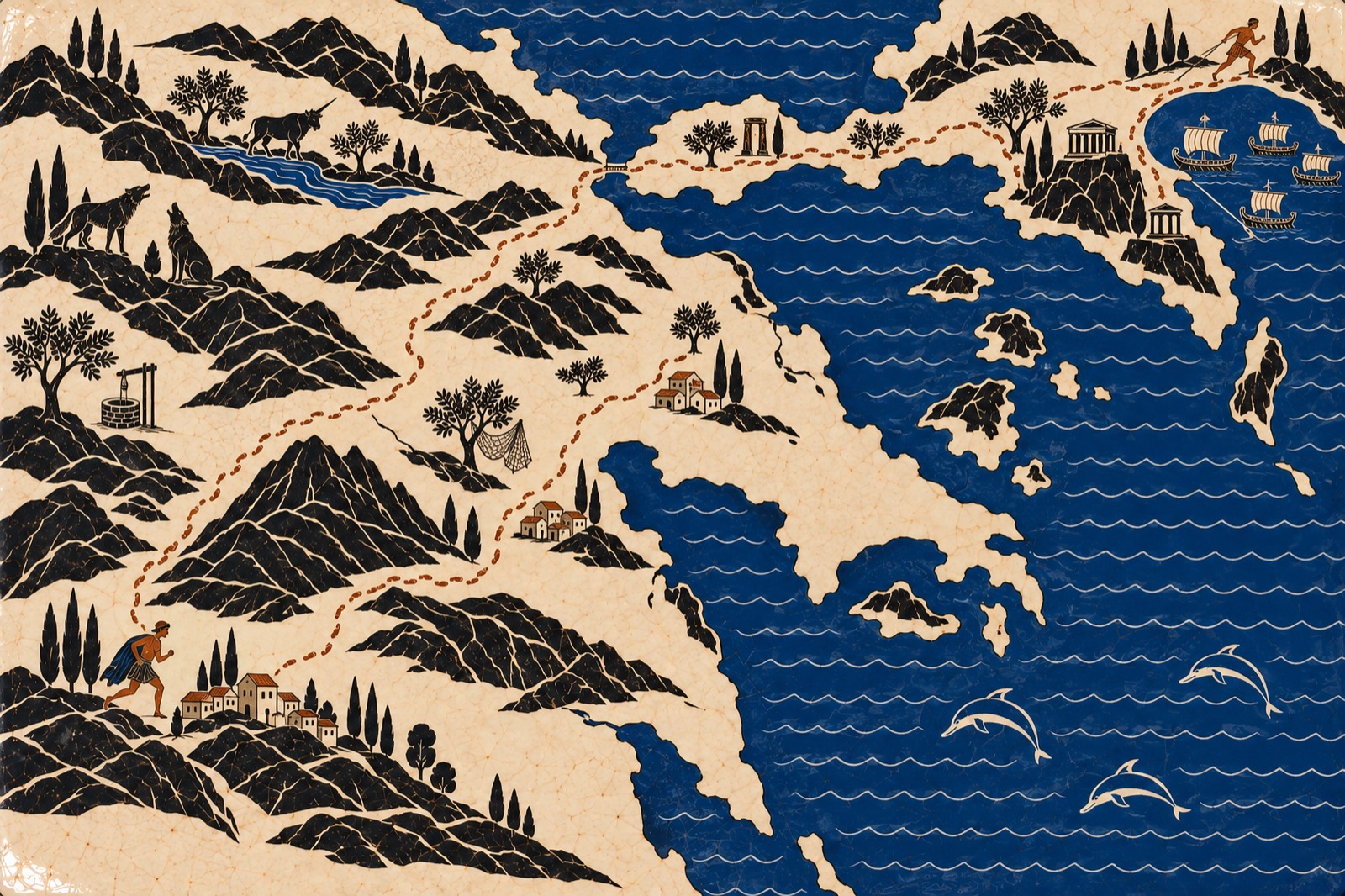
The illustrated edition has 42 full-page painted plates in the spirit of classic adventure-magazine art; a map of the runner's road, a cast frieze, and 33 chapter ornaments in Greek ceramic style; and "What Herodotus Says," a note separating the history from the invention.
The run that gave the race its name. The story Herodotus only began.
A note on how this book was made: the story, characters, and structure come from the author's original film pitch and research. The prose and illustrations were generated with AI tools under the author's direction, and the book says so plainly in its closing pages.