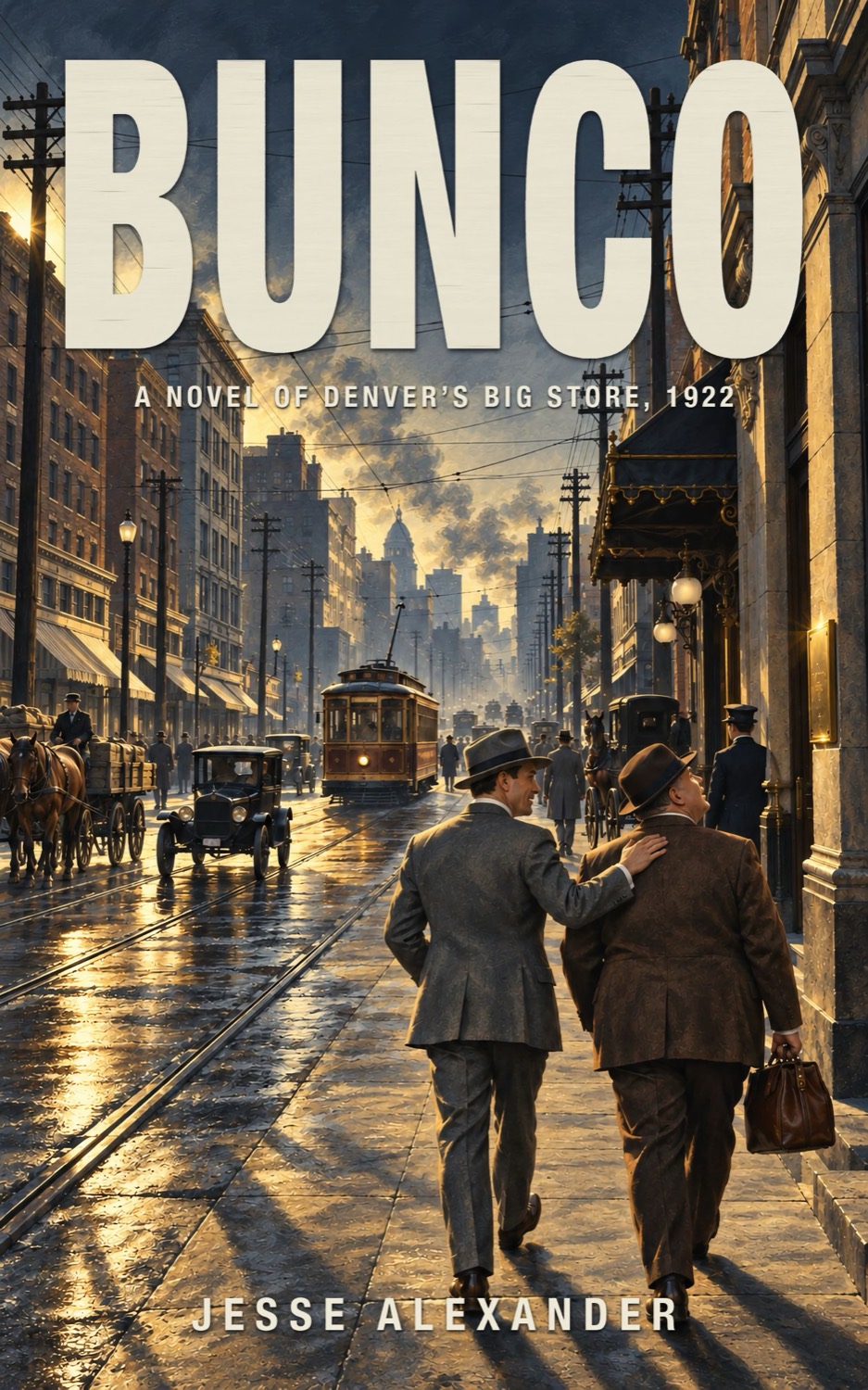
Novel · Denver, 1922
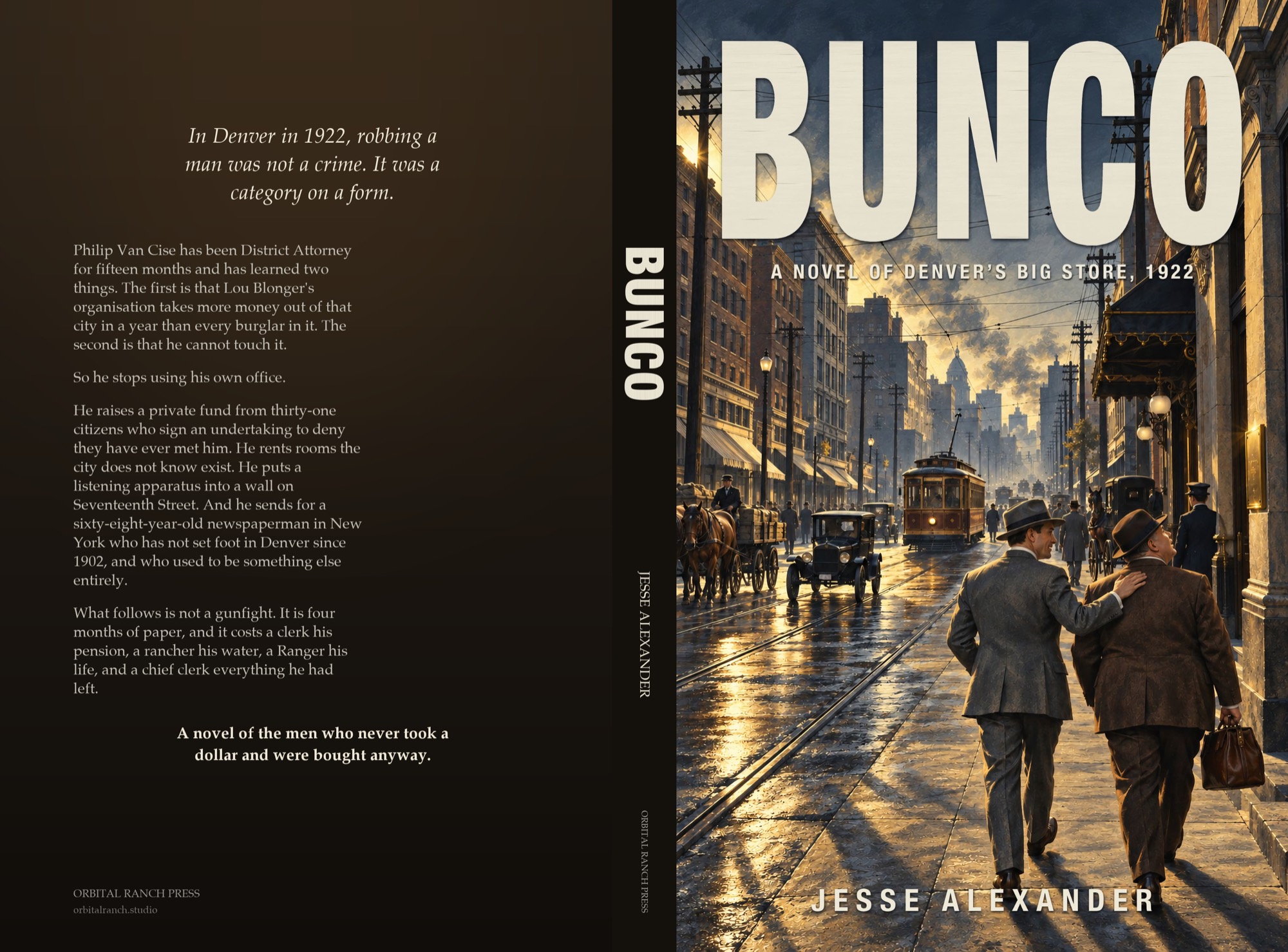
BUNCO
In Denver in 1922, robbing a man was not a crime. It was a category on a form.
Out now on AmazonNovel · 33 chaptersDenver · 1922Orbital Ranch Press
In Denver in 1922, robbing a man was not a crime. It was a category on a form.
Philip Van Cise has been District Attorney of the City and County of Denver for fifteen months, and he has learned two things. The first is that Lou Blonger's confidence organisation takes more money out of that city in a year than every burglar in it. The second is that he cannot touch it. The complaints come in and the police write them up as bunco, and bunco is not a crime, and the men writing the reports have been writing them that way since before he was born.
So he stops using his own office.
He raises a private fund from thirty-one citizens who sign an undertaking to deny they have ever met him. He rents four rooms the city does not know exist. He runs a wire into a wall on Seventeenth Street and listens to a seventy-two-year-old man conduct a business. And because he has no one he can trust to walk into a back room on Larimer Street, he sends for a sixty-eight-year-old newspaperman in New York who has not set foot in Denver since 1902, and who used to be something else entirely.
What follows is not a gunfight.
It is four months of paper. A cattle yard's receipt book. A chart built out of a newspaper. A statute nobody has read since 1898. A rancher from Pueblo County who agrees to be robbed on purpose, and says yes out loud in a courtroom to every humiliating question defence counsel can think of. And a district attorney who finds out he is very good at building a machine, and that the machine does not come apart when he is finished with it.
BUNCO is a novel about paperwork as a weapon, about a city where the corruption was kind, and about the people who never took a dollar and were bought anyway.
A note on what is true. Philip Van Cise, Lou Blonger, Mattie Silks, Mary Lathrop, Margaret Brown and J. Frank Norfleet were real people, and the arrests of the twenty-fourth of August, 1922, and the trial that followed, happened. What they say and do in these pages is invented. The largest of those inventions is the presence in Denver, through that summer, of a man who was not there. A full account of the liberties taken is at the back of the book.