Process · the art
How the art gets made
We don’t ask a machine to dream a monster. We build the body out of ordinary things first, then paint it.
Generated with AI tools, under the creative direction of Jesse Alexander. This page walks the method in order: the collage, the same method on worlds and ships, where the bodies start, the proportion studies, the painting styles, the raw shapes and the rejects.
 How we built it ▸
How the art gets made
Collage first, paint second
We don't ask a machine to dream up a monster. If you type "scary alien" into an image model, you get the alien from every space movie you've ever seen. So we build our monsters out of junk drawers instead: plain things like bark and stone and seed pods, cut up, thrown together by chance, mirrored, and only then painted.
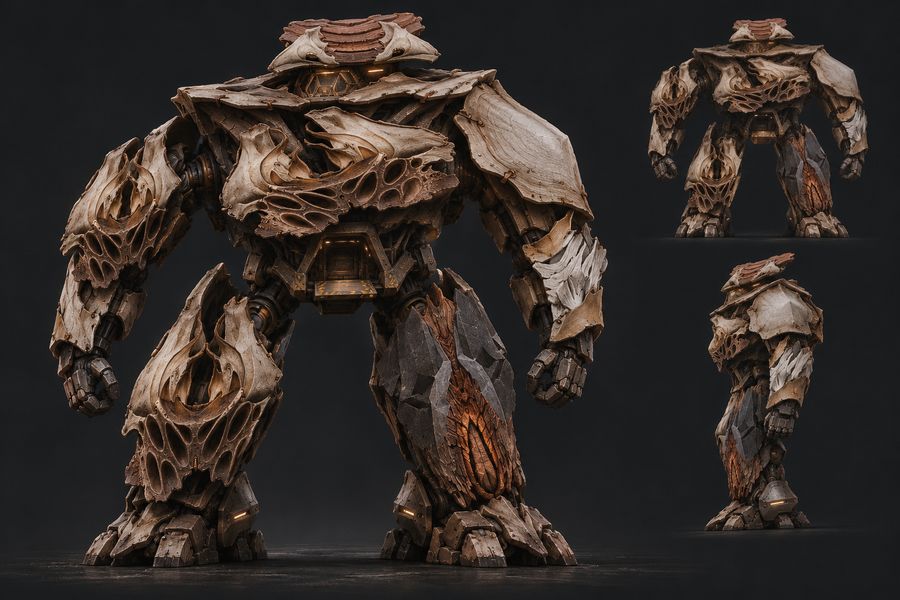
Our very first painted species skipped the collage and came straight from written prompts. They looked like everybody else's aliens, so we pulled them. Starting from a collage keeps every body, ship and world strange in its own way, because the strange part is there before the painting starts.
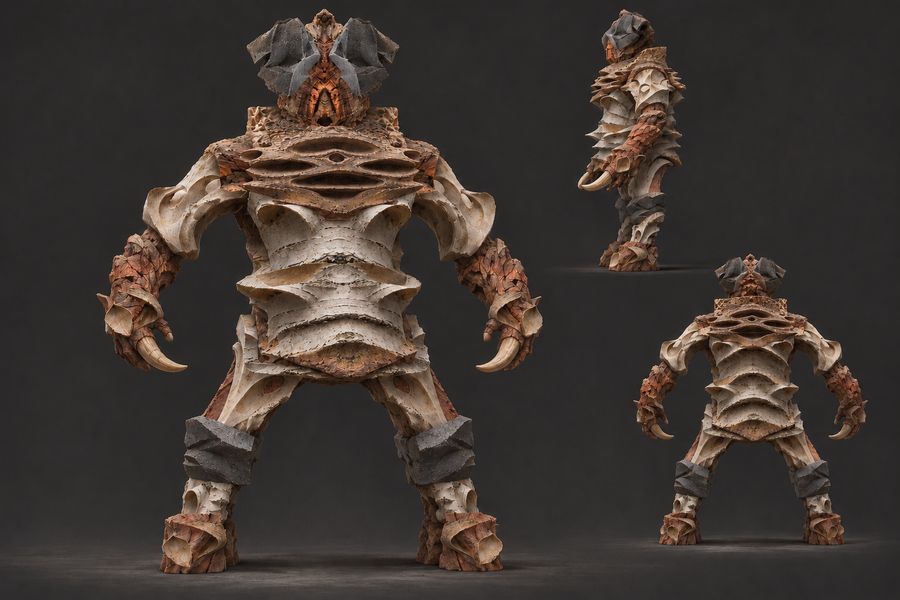
Here's the whole process, start to finish, using the head and body of one Apple: Tukkar Omdor, the Brakkan.
- 1Start with ordinary things
- 2Throw them together, and write the dice down
- 3Mirror it
- 4Pick one, and keep the rest
- 5Grow a body from the same parts
- 6Paint over it, and keep the silhouette
- 7Put it to work
- 1
Start with ordinary things
Each source image is one plain object, made by an image model as a straight material study under a strict brief: it's a thing, not a creature, so no face, no eyes, no limbs and no symmetry. We want the material's shapes, its cracks and holes and ridges, without anybody's idea of a monster already baked in. Tukkar started with these seven.
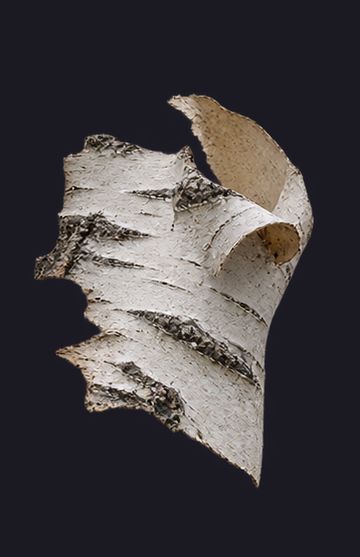
Silver birch bark 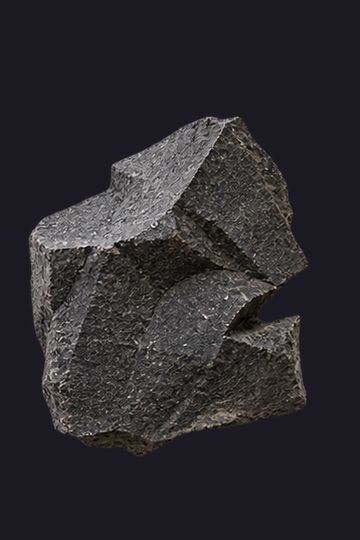
Fractured basalt 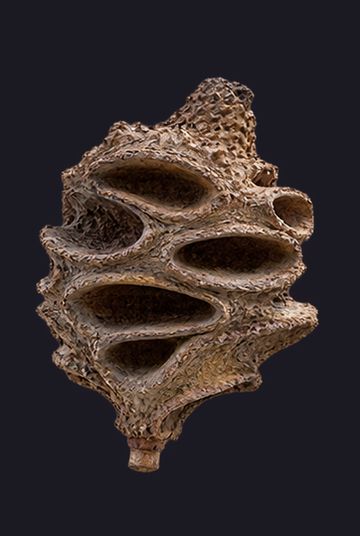
A dry banksia pod 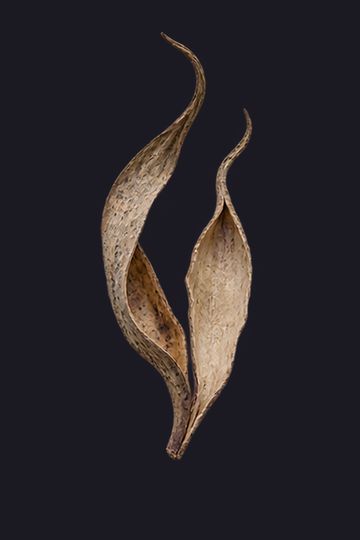
A split milkweed pod 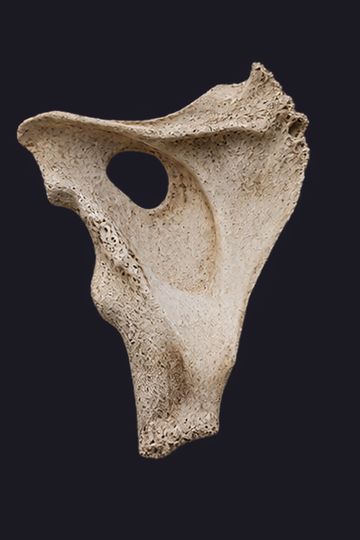
A bone-like plate 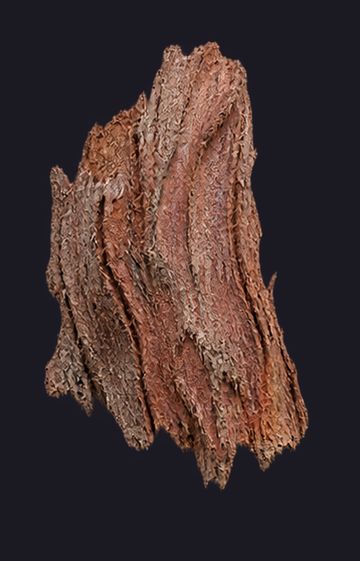
Pine bark 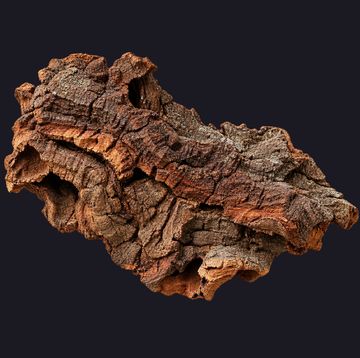
Cork oak bark The bone-like plate is generated imagery, not a real bone. No photographs or real specimens went in.
- 2
Throw them together, and write the dice down
A short script cuts each object out and layers a few of them on top of each other, with random size, rotation and position, and the pieces have to overlap between a tenth and seven tenths of the way. Every random number is a recorded seed, so any collage can be rebuilt exactly. Tukkar's batch was eight collages from eight seeds.
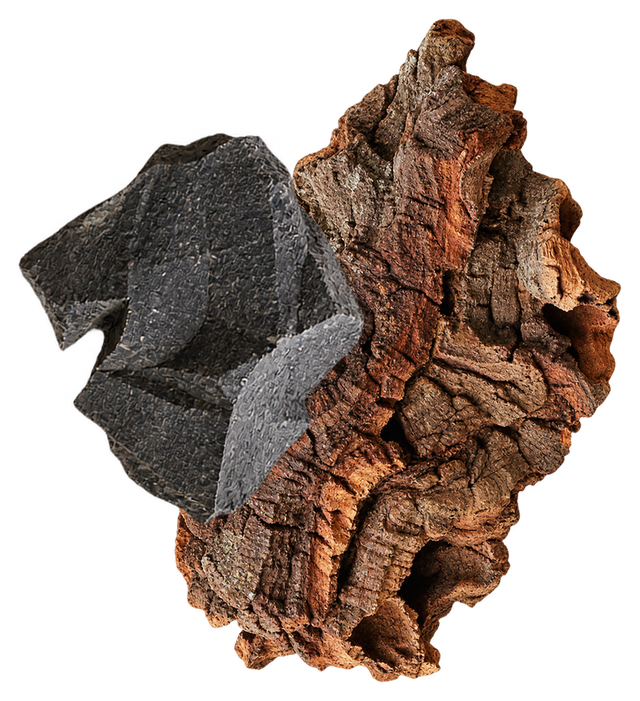
Collage 1, before the mirror 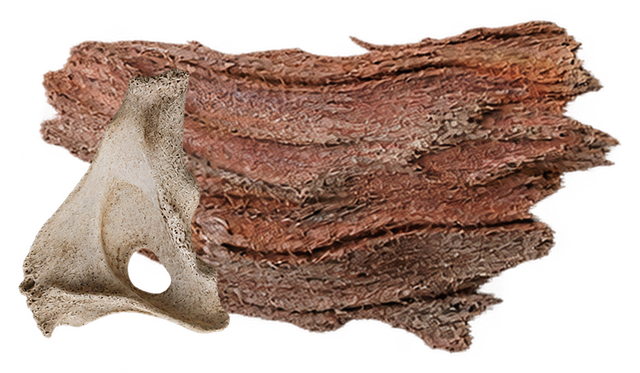
Collage 2, before the mirror 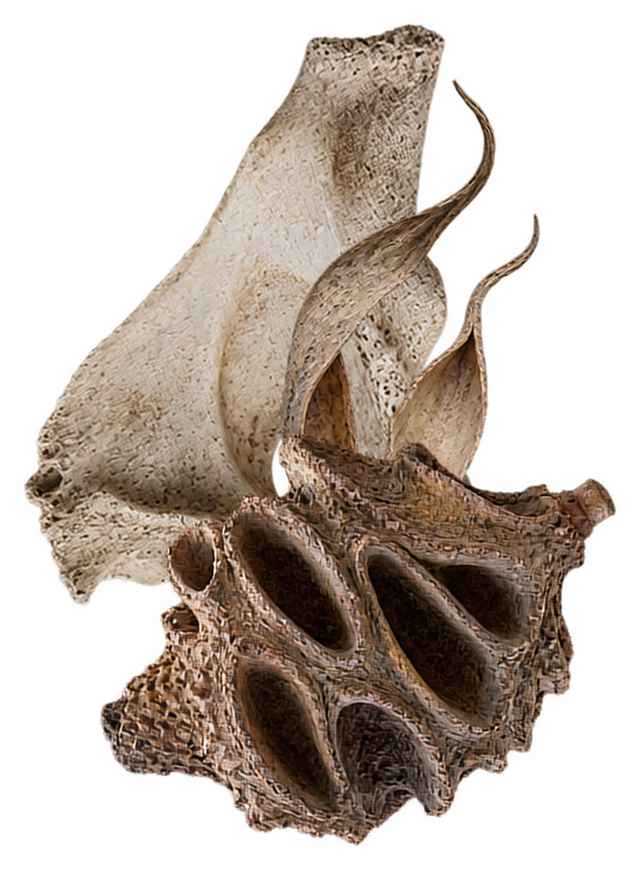
Collage 3, before the mirror - 3
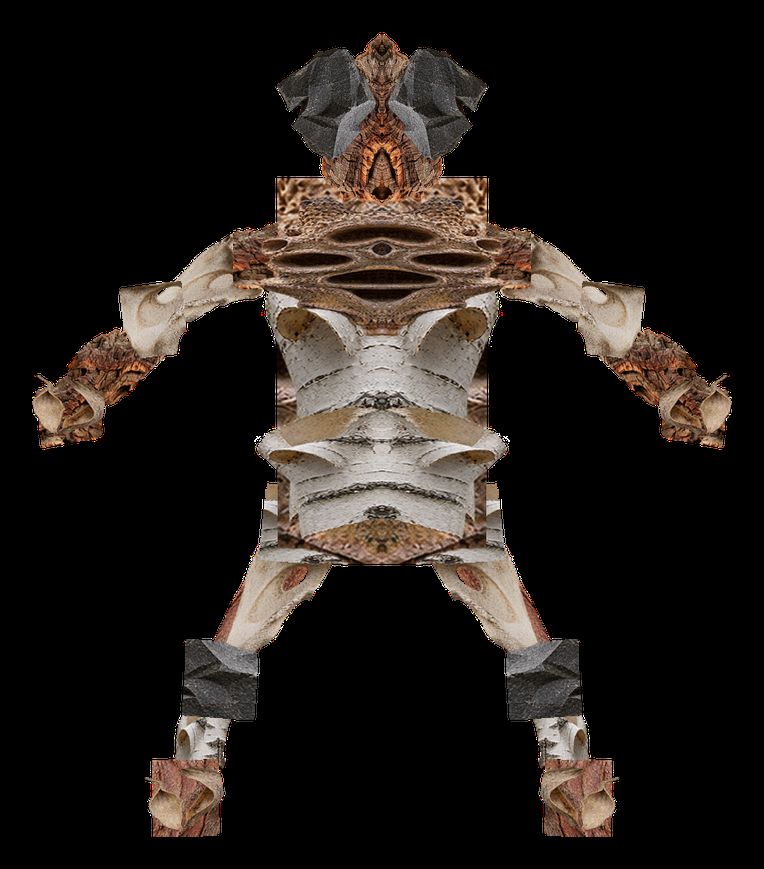
Mirror it
Next we pick a line, keep one side, and flip that exact half over. Nothing gets painted, and nobody adds eyes or a mouth. Faces just show up, the way they do in a cracked wall. Try it: pick a collage, slide the line, and watch a creature show up.
- 4
Pick one, and keep the rest
Each collage gets mirrored at a couple of lines, so a batch makes a stack of candidates. Some are great, some fall apart into floating bits, and we keep all of them. I picked the paired basalt plates over the rust-brown cork for Tukkar. The others go back in the pool for other peoples, ships and props.
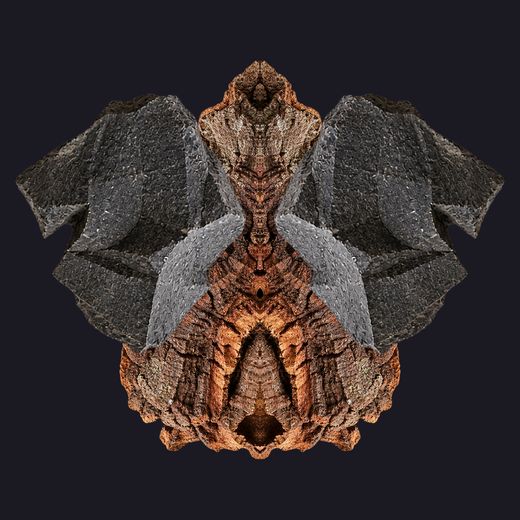
Basalt over corkTUKKAR 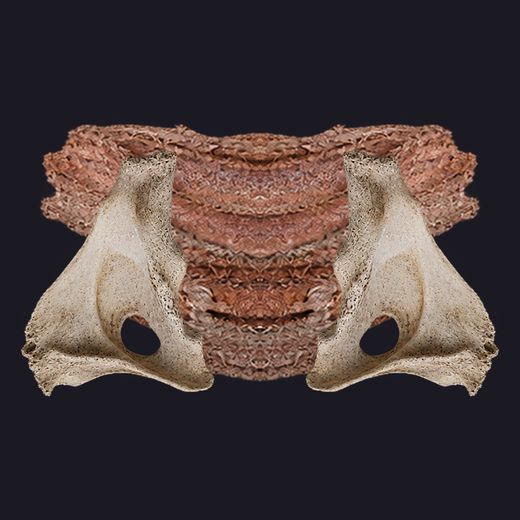
Pine ridges and a bone platekept for someone else 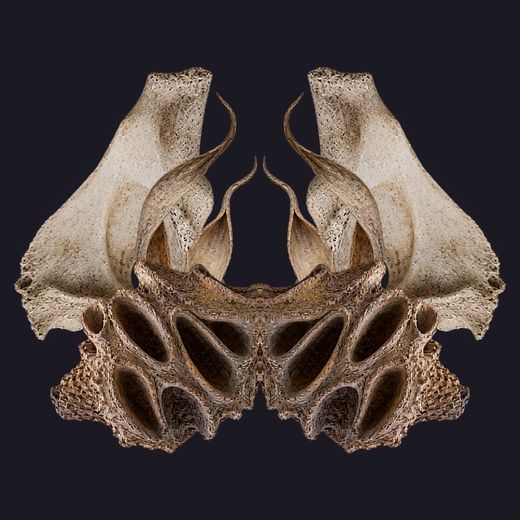
An open archkept for someone else 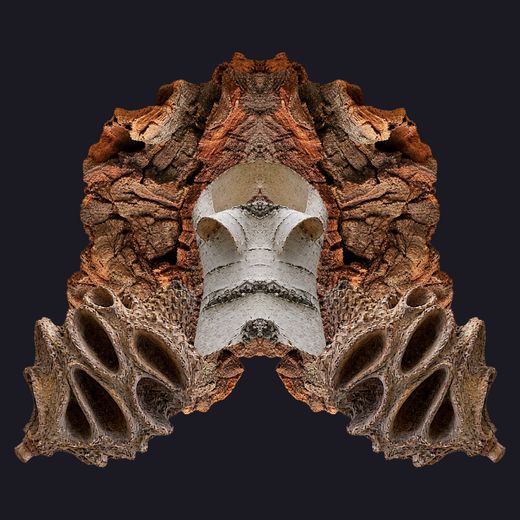
Cork flangeskept for someone else - 5
Grow a body from the same parts
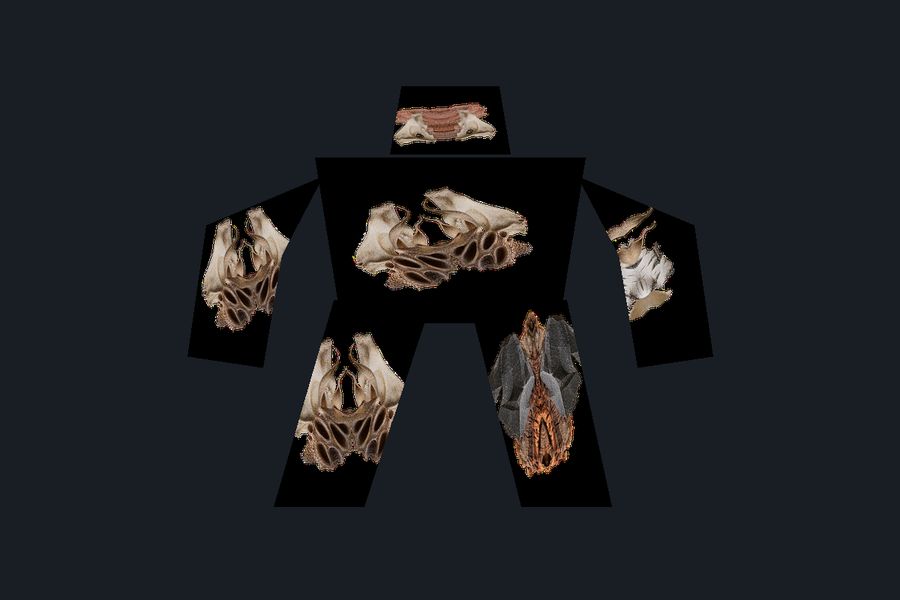
The chosen head stays locked in place, same size, same spot, and new bodies get assembled under it from the same material fragments. We try a spread on purpose: two limbs to ten, short and wide to tall and narrow, all drawn to one scale and standing on one baseline. Tukkar is canonically 2.3 meters, so the deep barrel at his height became the favorite. The rest are seed stock for the galaxy.
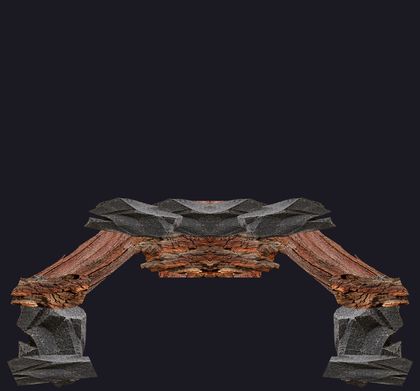
Suspended vault2 load-bearing forelimbs / no separate legs · 1.80 m 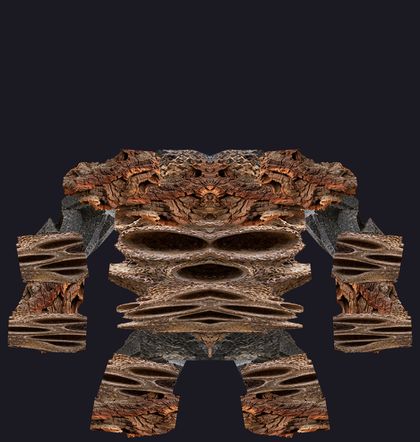
Deep barrel2 arms + 2 legs · 2.30 m · his height 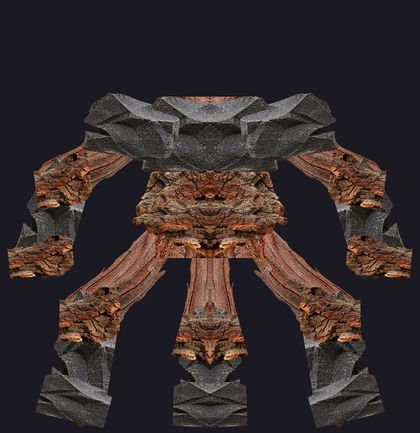
Tripod bastion2 arms + 3 legs · 2.65 m 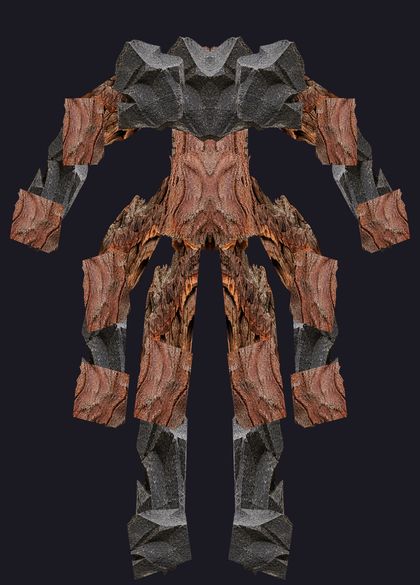
Split reach tower4 arms + 2 legs · 3.10 m 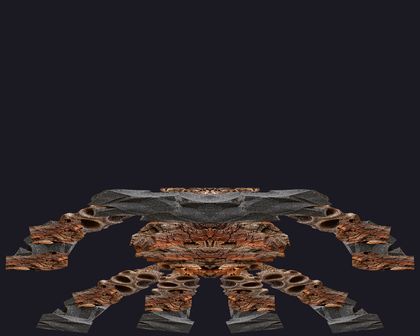
Four-leg fortress2 arms + 4 legs · 1.65 m 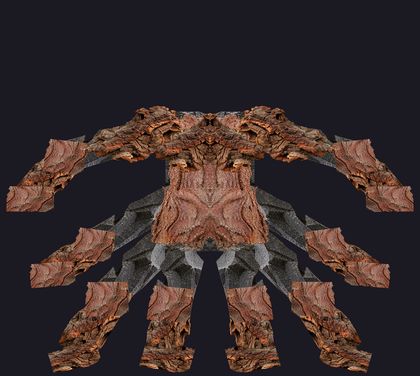
Eight-point shield4 arms + 4 legs · 2.45 m 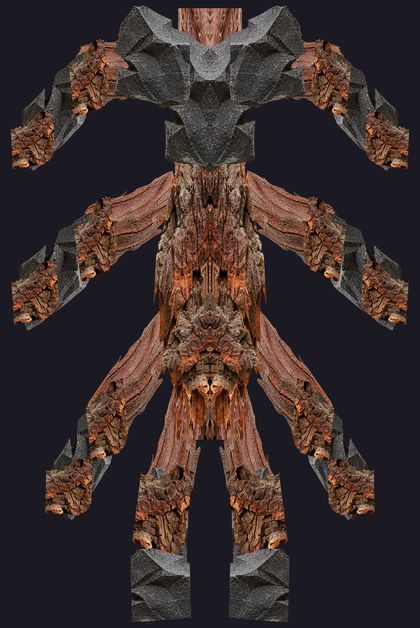
Six-arm column6 arms + 2 legs · 3.25 m 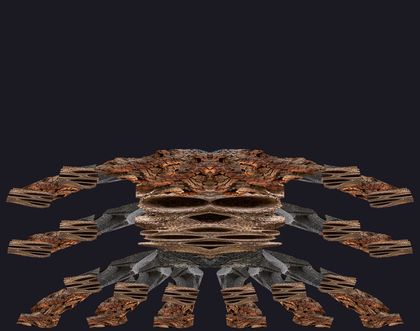
Ten-limb redoubt4 arms + 6 legs · 1.95 m Eight body trials for one head, all at the same scale. Limb counts and heights are explorations; nothing here is final anatomy.
- 6
Paint over it, and keep the silhouette
Only now does the painting pass run, working right on top of the collage. It has to keep the outline, the big masses and the holes, so the cut seams turn into plates and joints instead of disappearing. The fine detail it adds is a proposal I can throw out.
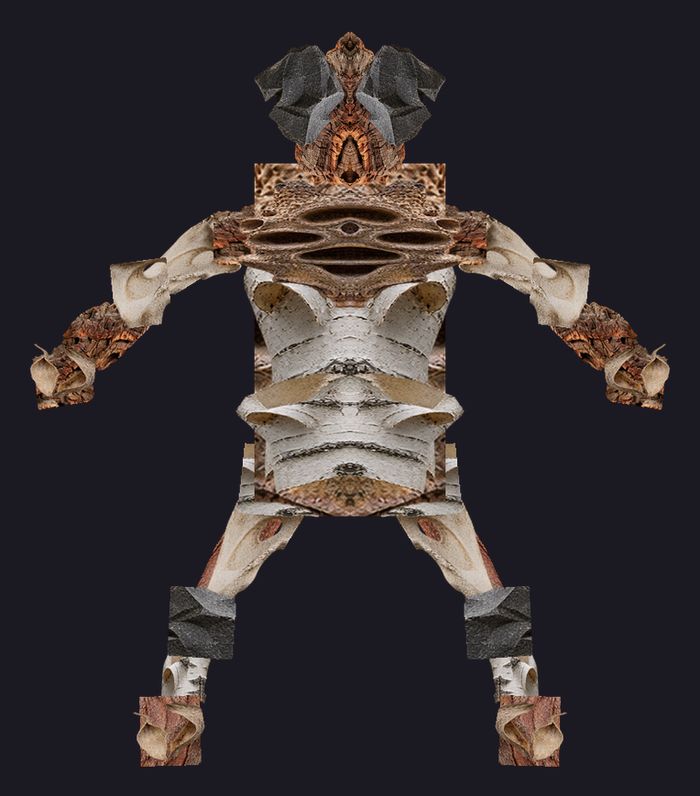
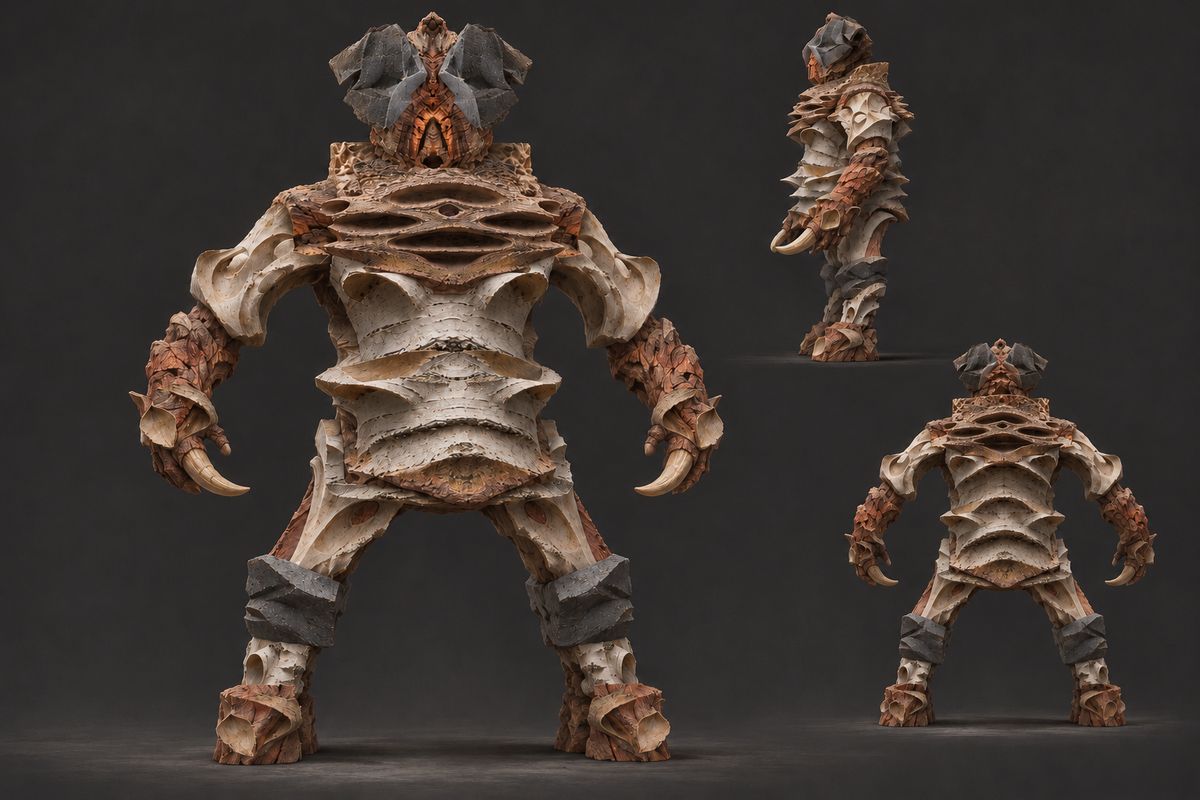
Left: the Brakkan collage the painting started from. Right: the painted development sheet.
- 7
Put it to work
Then the design walks into scenes and we find out if it holds up. Tukkar in the crew lineup, and fixing a ship in the rain with Abigail on Vokra.
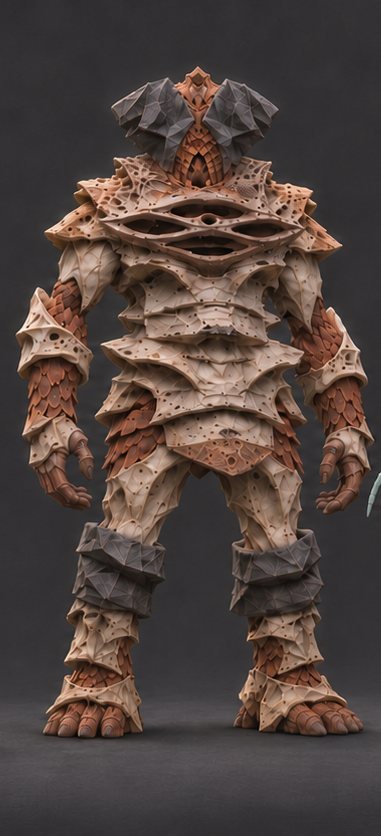
Tukkar 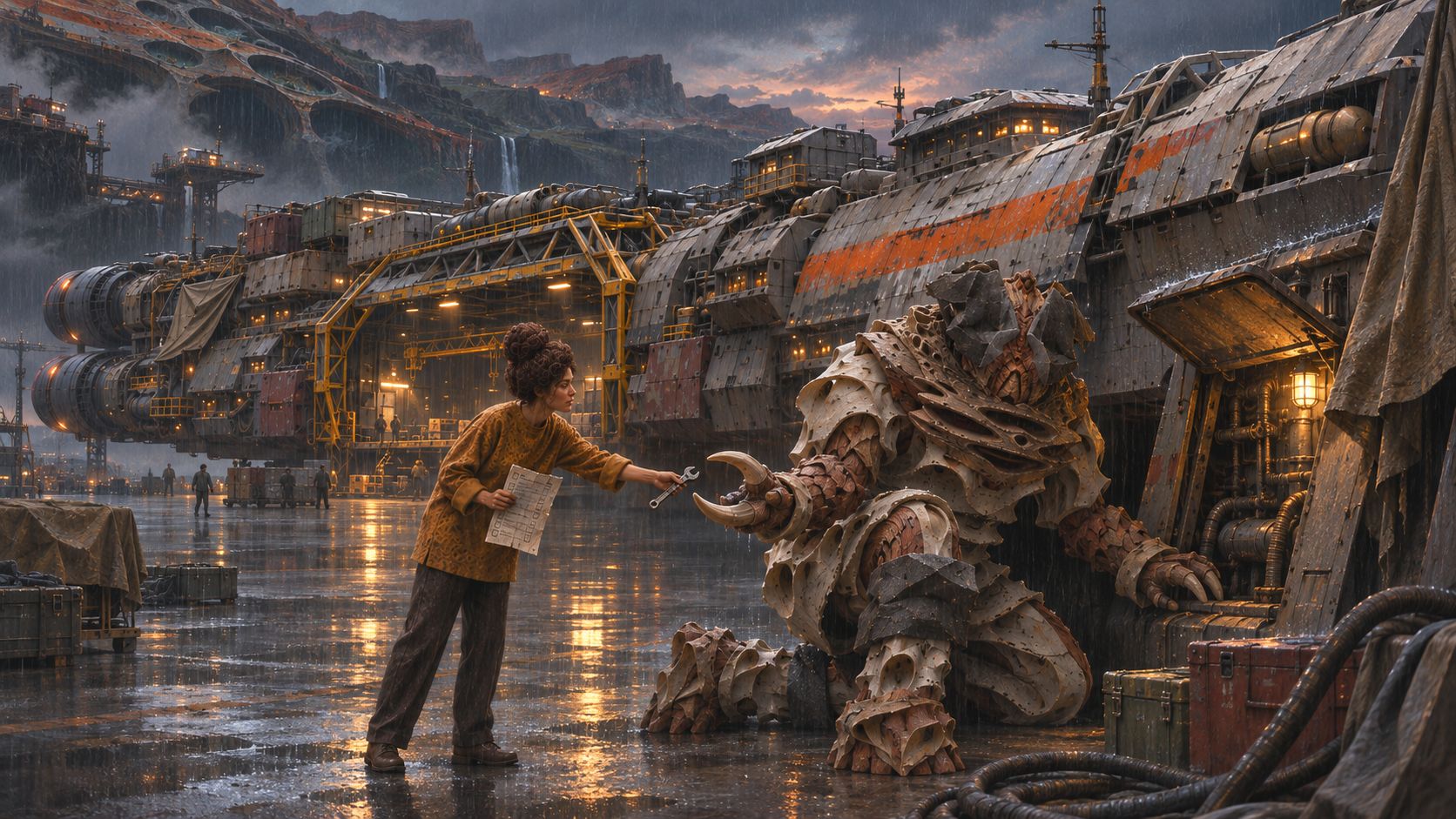
What the painting pass has to respect
An exotic head doesn't get human arms, five-finger hands and a pair of trousers by default. Its folds, branches and openings carry down through the whole body.
If something touches the ground, it's support. If it grabs, it's a hand. A design doesn't get an extra leg just to look more alien.
Gear gets cut for the body wearing it. Take the color away and you should still be able to tell two characters apart by their clothes.
Look at the silhouette small and dark, and fix any shape down the middle that reads as something it shouldn't.
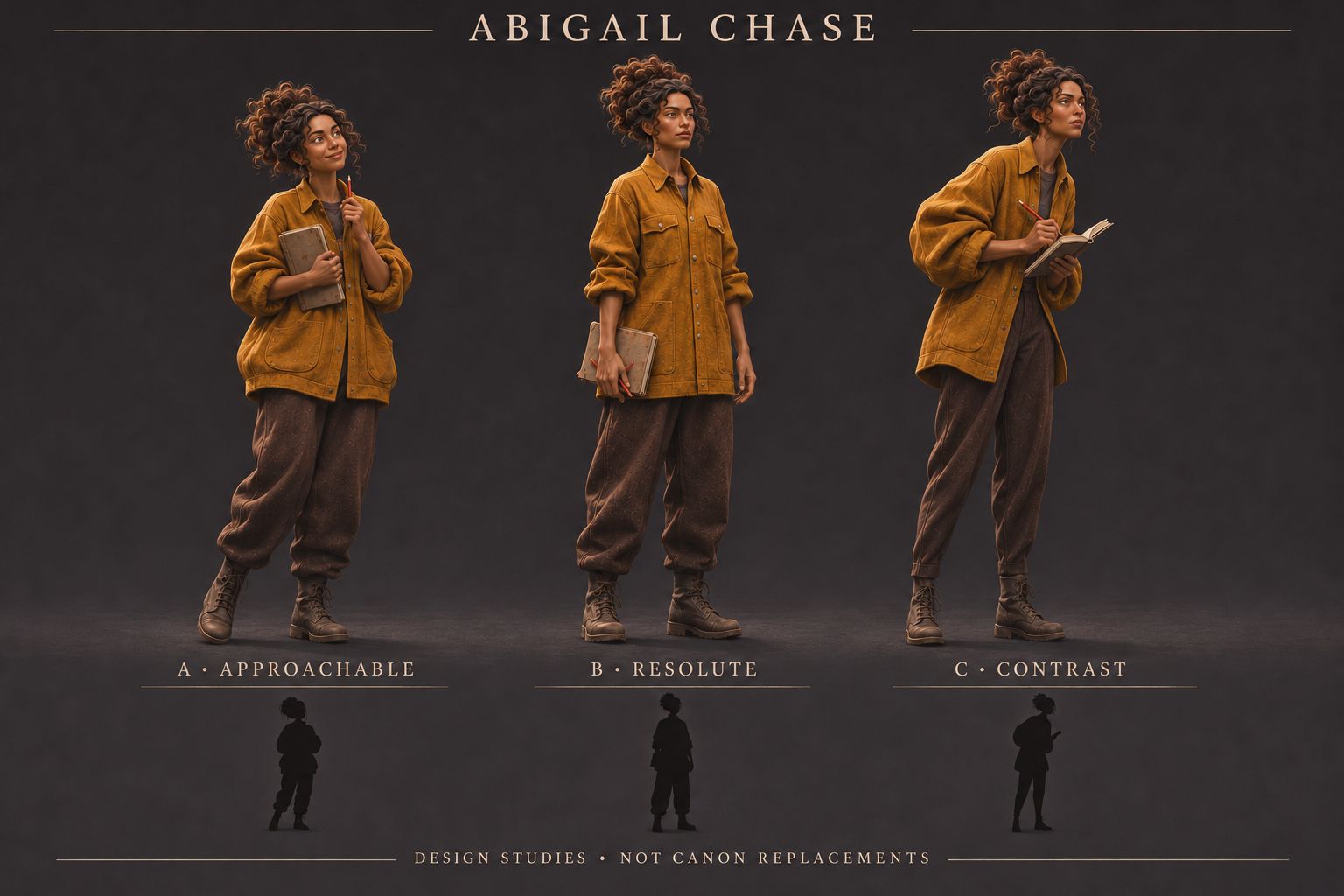
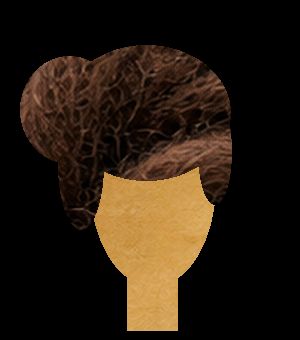
Abigail's curls belong to Abigail. A ship or a chair doesn't get her hairstyle because a piece of bark happened to look like it.
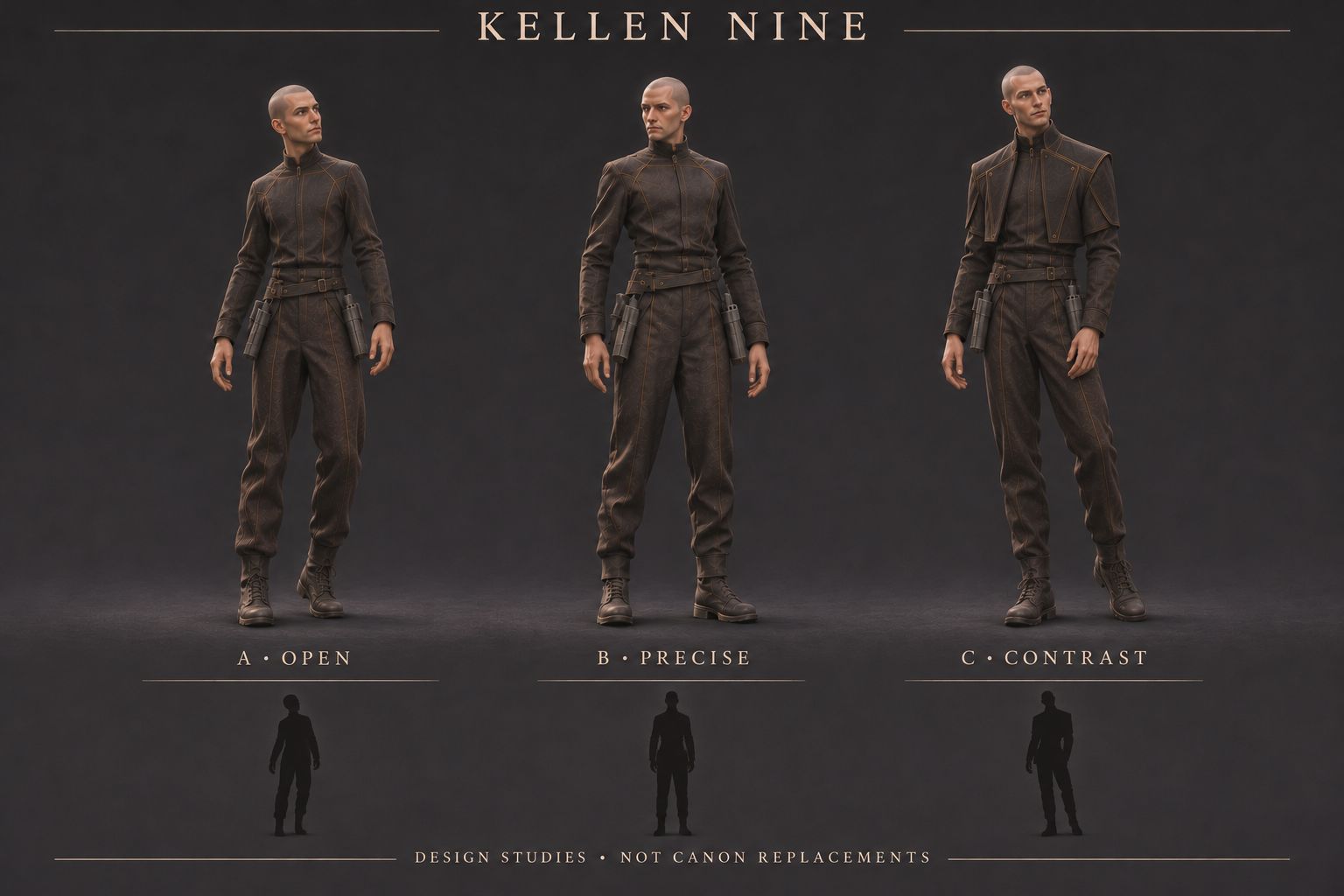
Kellen was grown in a lab, and he still has a plain human skull and ears. No crest, no horns.
What those rules did to the lineup
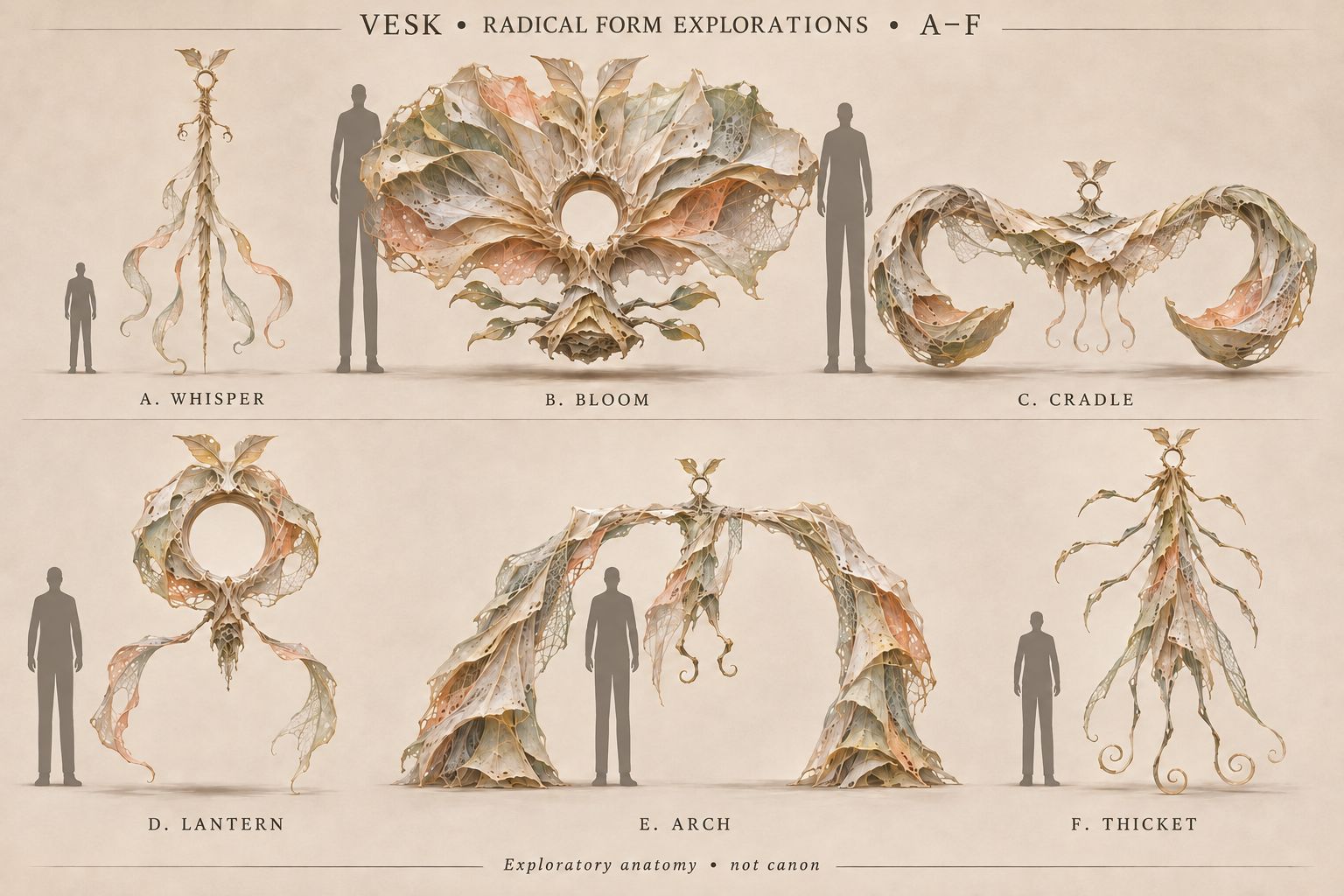
Here's the first lineup next to the one we approved. In the first, four very different heads sat on the same human body in the same jacket and trousers, and Kellen had a crest. Run the rules and the bodies change. Nym got long, many-jointed hands to go with that nested head. Vesk's four lower limbs float, curled up off the floor. Lio stands on two legs under that dark keel. Kellen went back to a plain human head. Tukkar was already right, so he stayed.
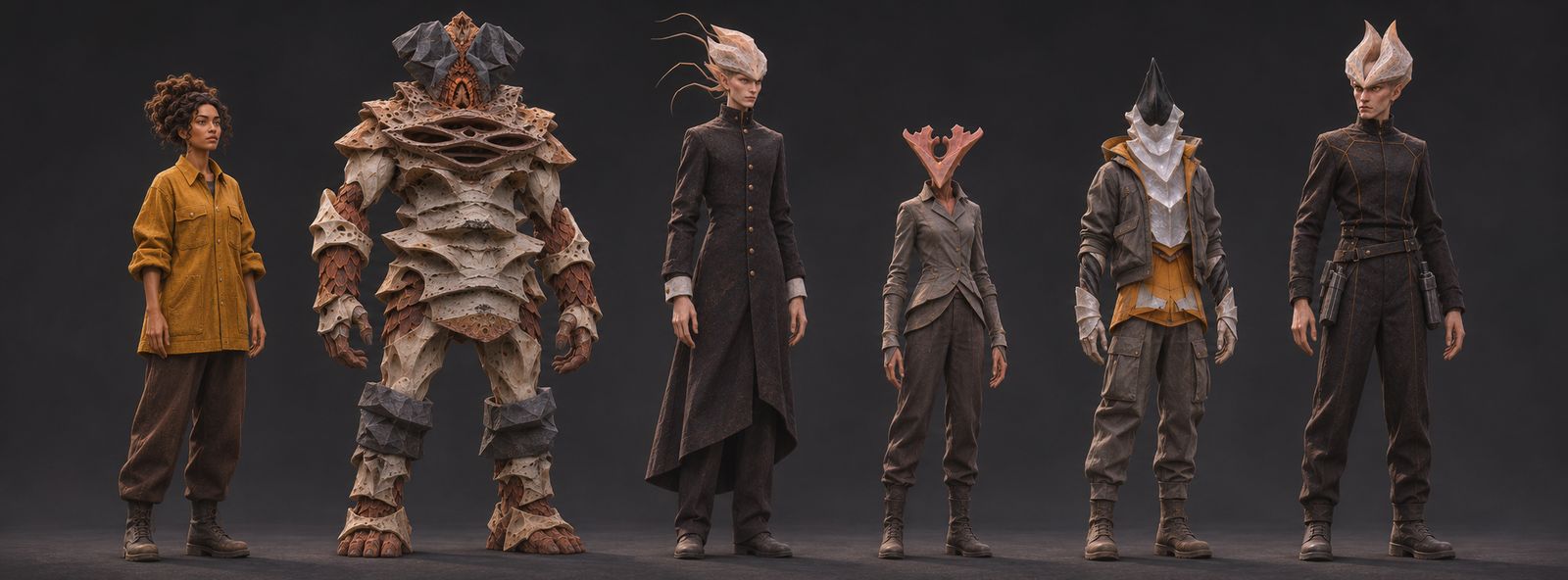
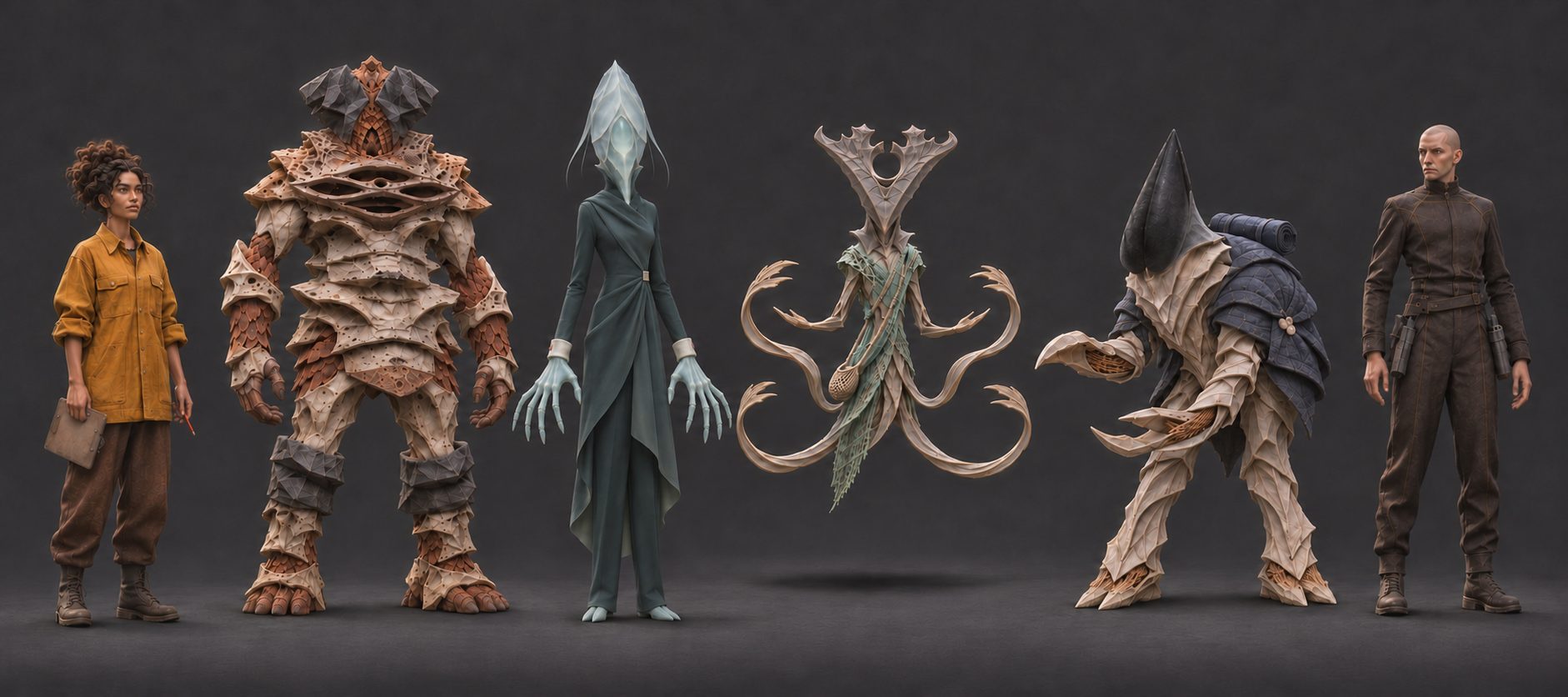
Same method, every size
Worlds and ships
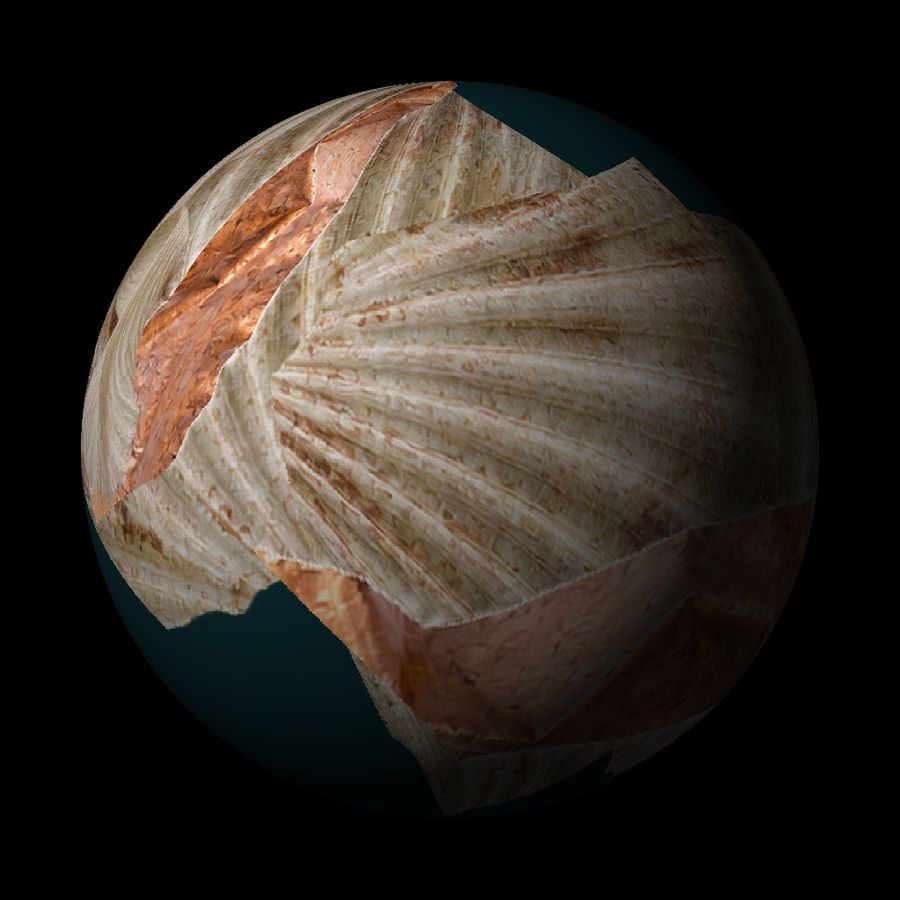
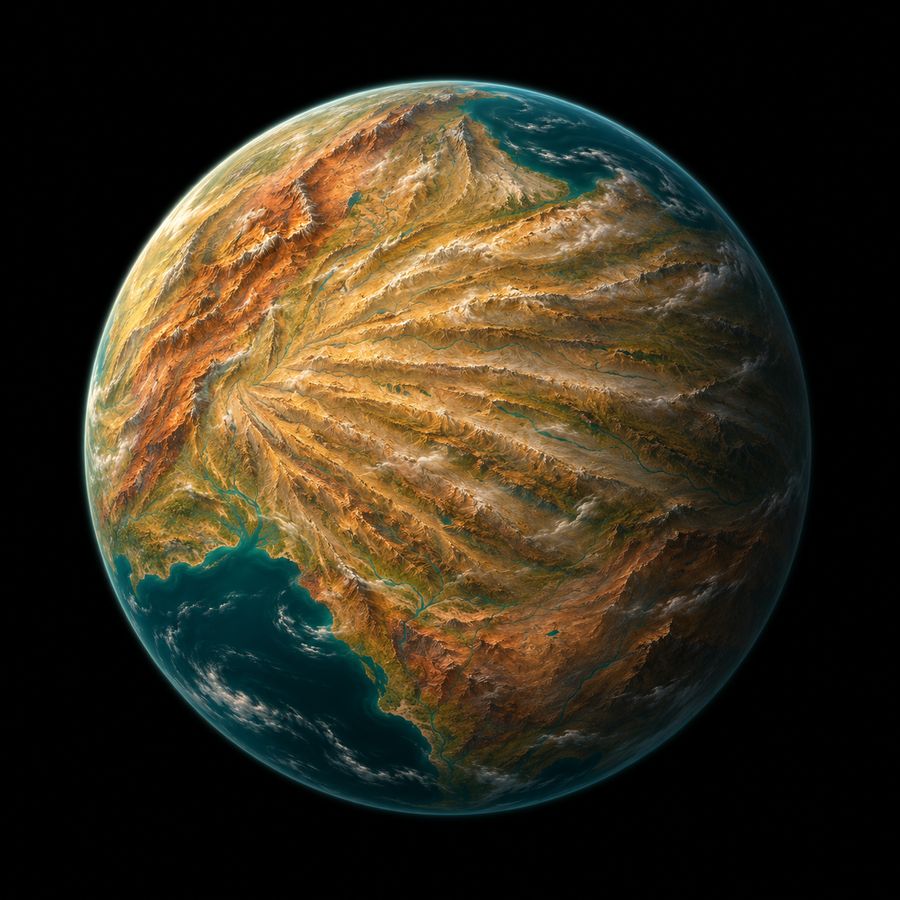
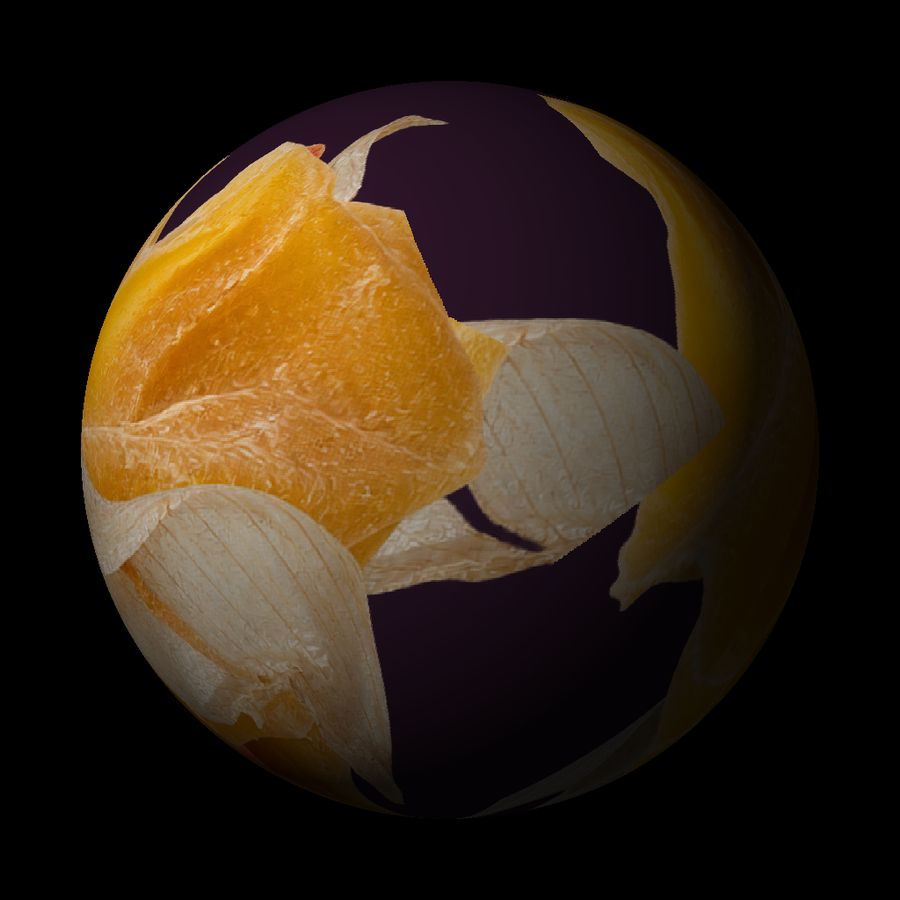
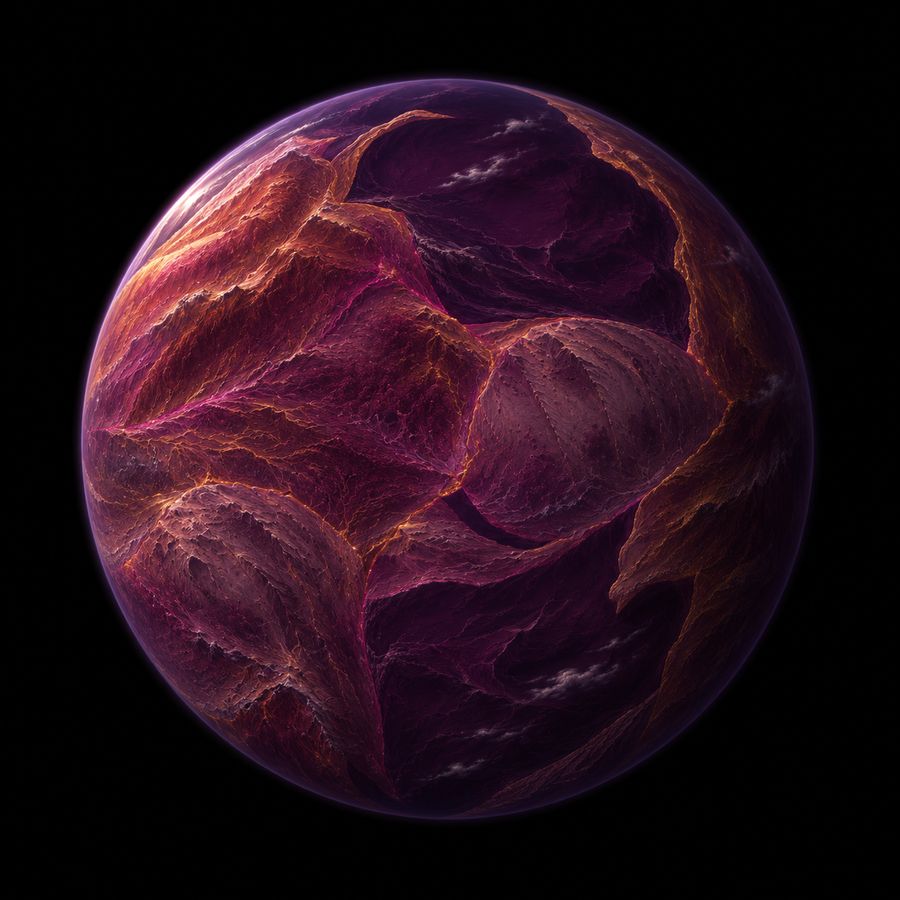
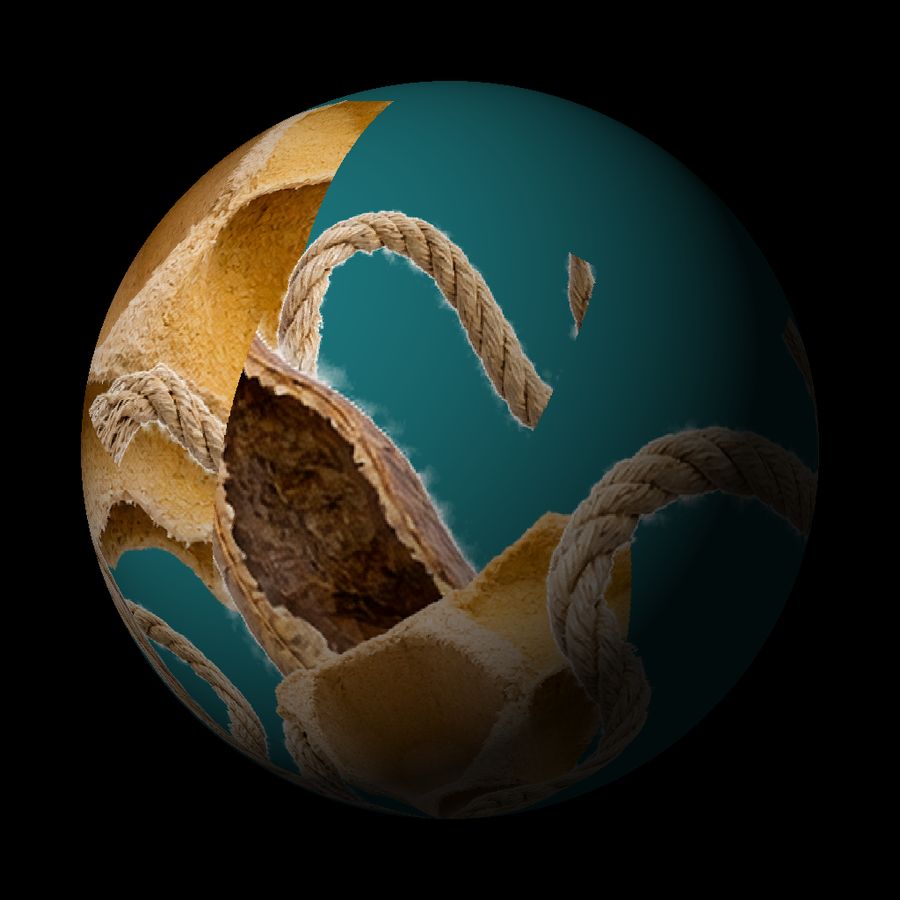
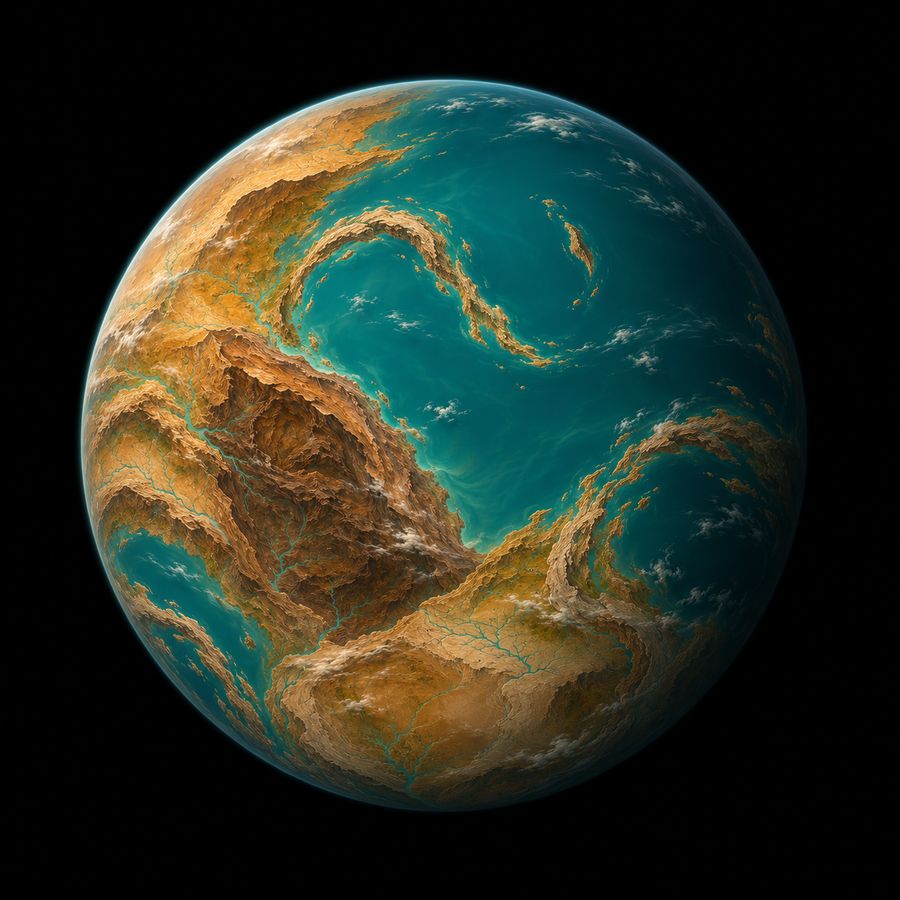
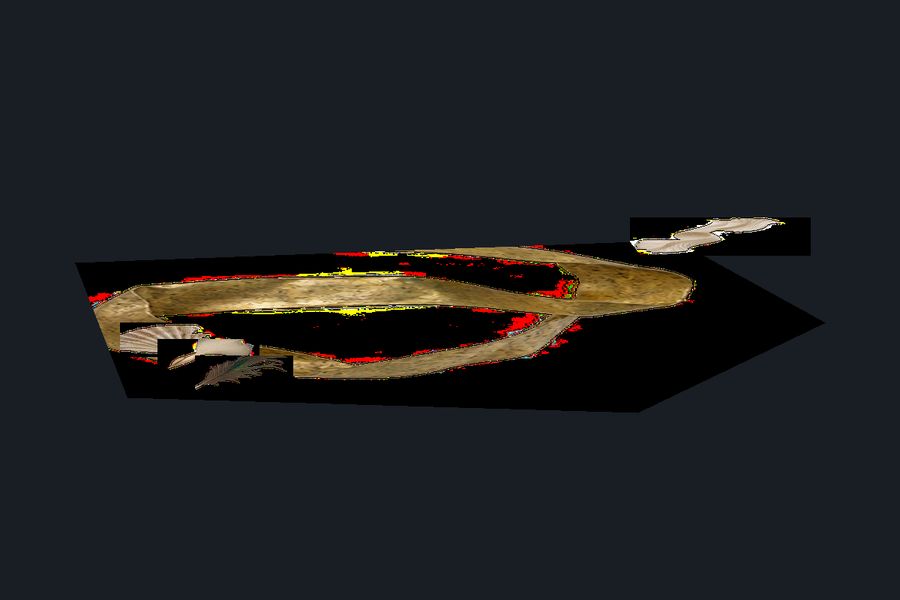
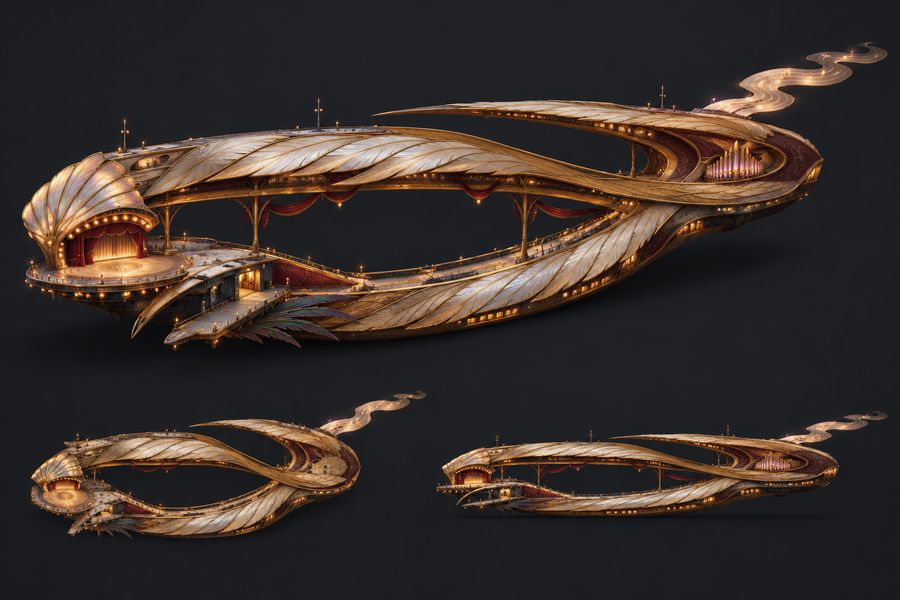
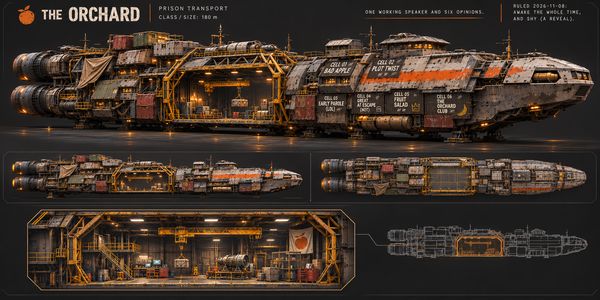
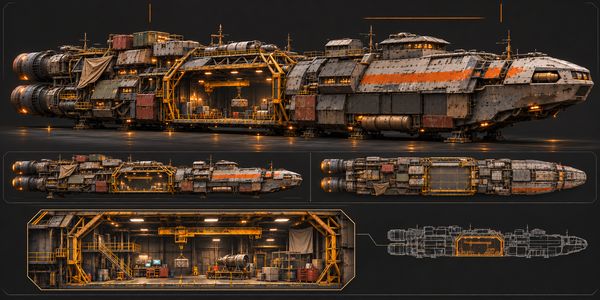
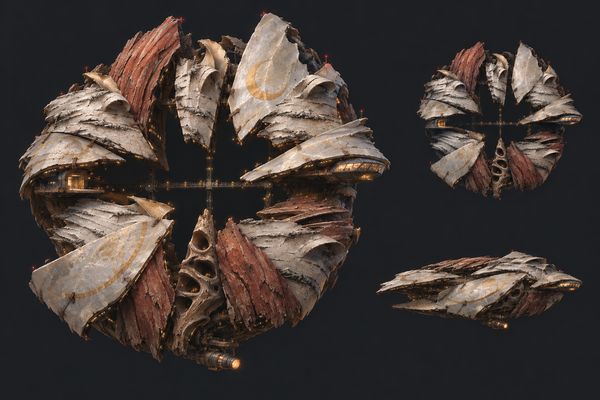
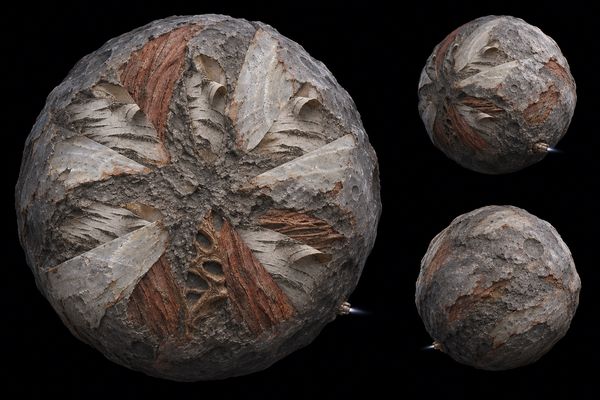
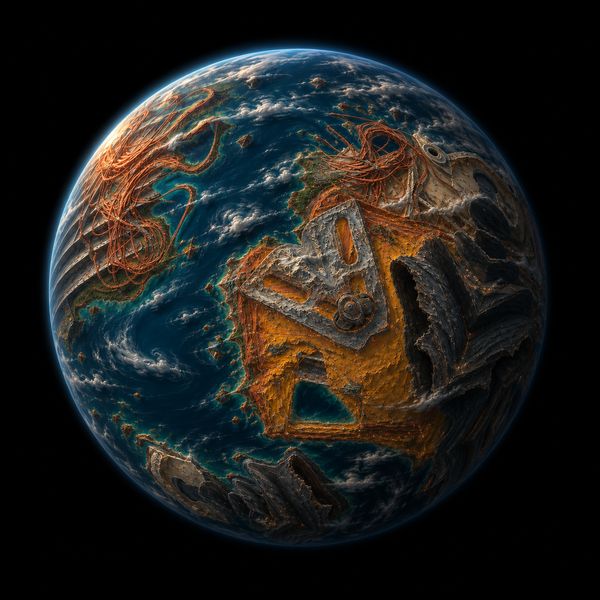
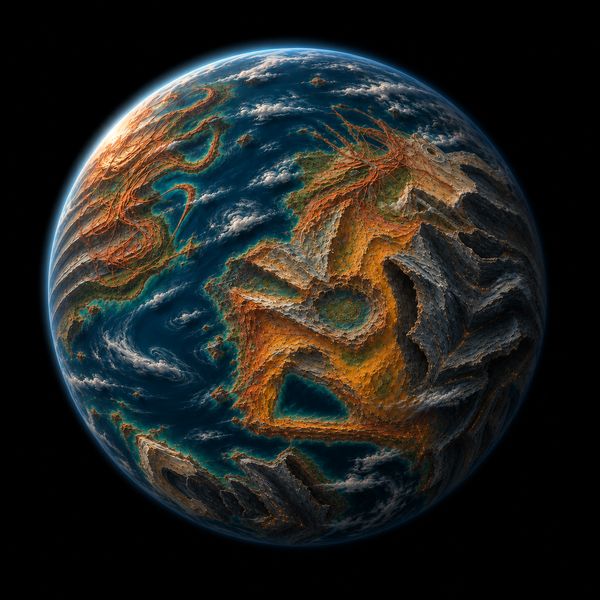
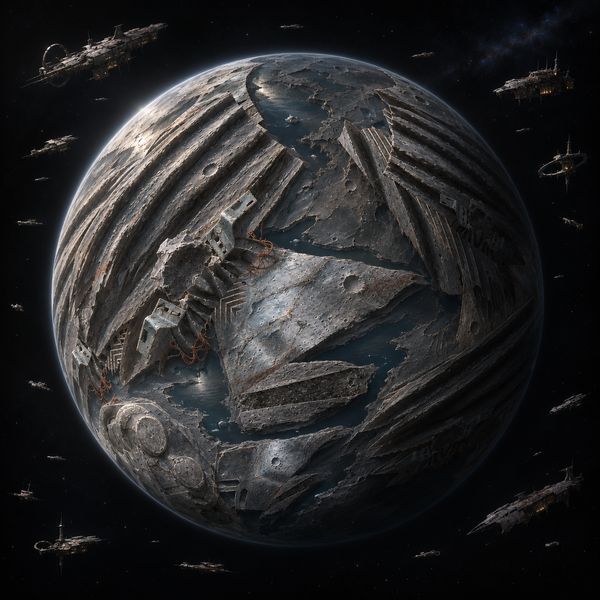
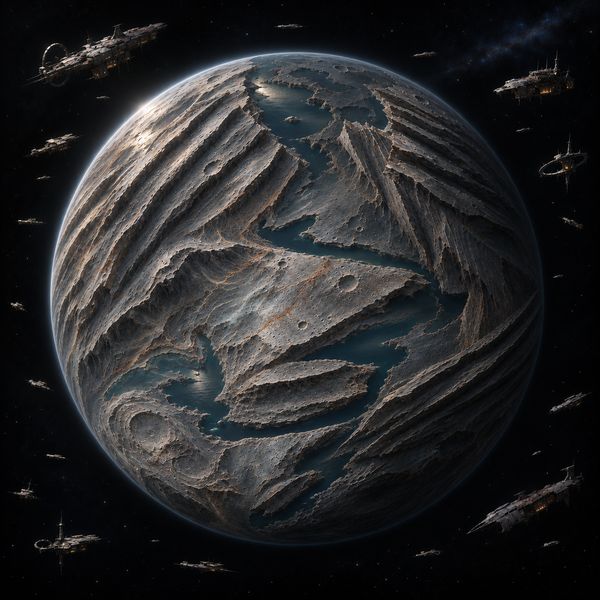
Planets and ships start the same way. For a world, the material fragments get wrapped onto a sphere, and the cut seams between them turn into coastlines, ridges and riverbeds when it's painted.
The painting has to keep the collage's outline, its big masses and its open channels. That's why Auri has a fan of gold ridges across one side and Tevo has turquoise rivers running through it, with no planet that looks like a copy of Earth except Earth.
Drag the slider on each world.
Push the proportions
Same material, different bodies
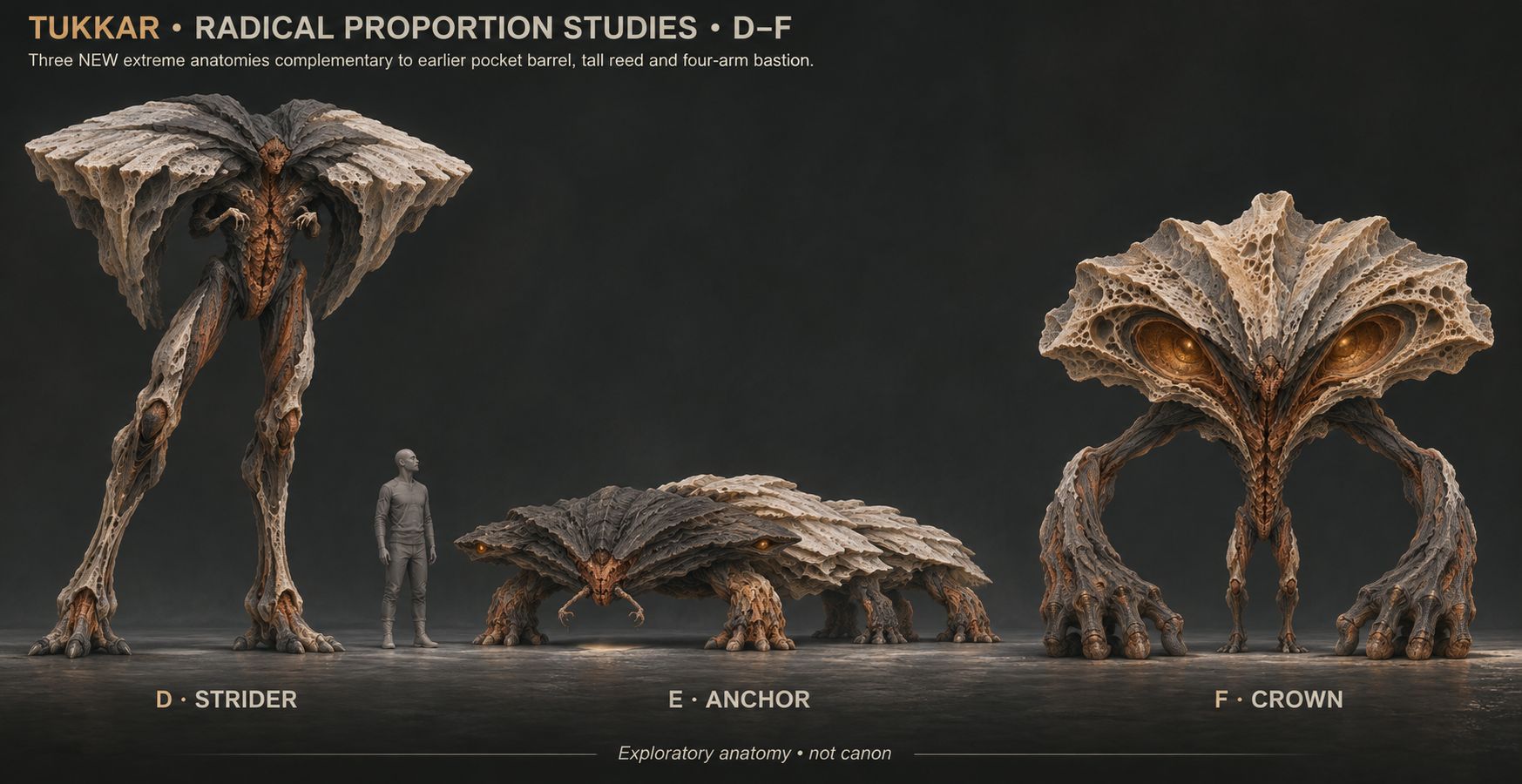
I wanted the aliens in DARK CELL to feel like they came from different worlds, not like variations on one human body.
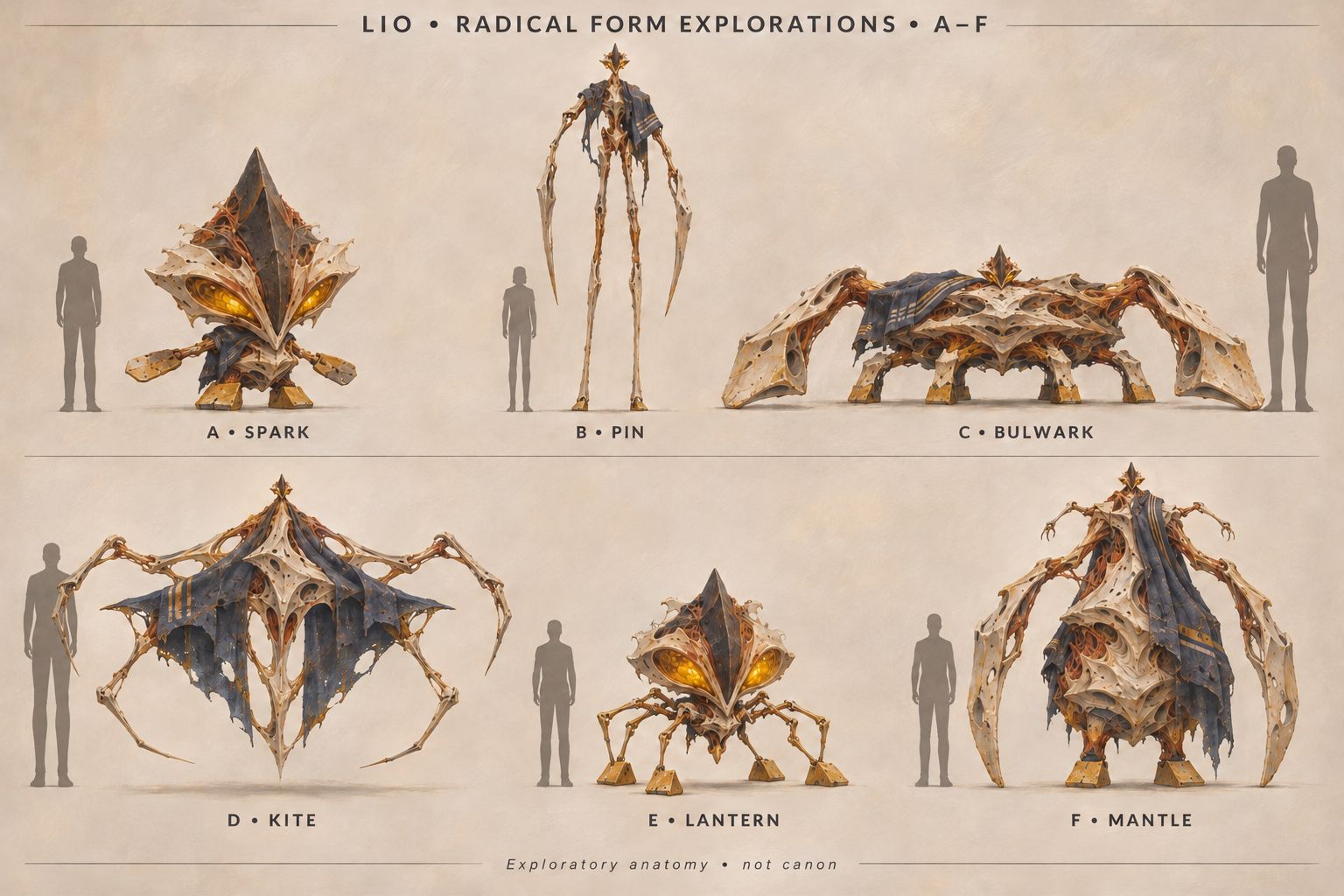
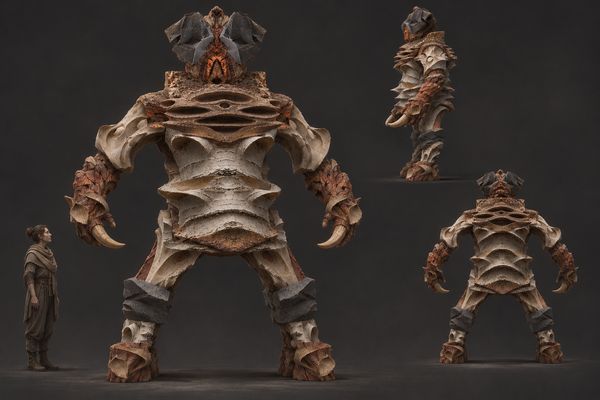
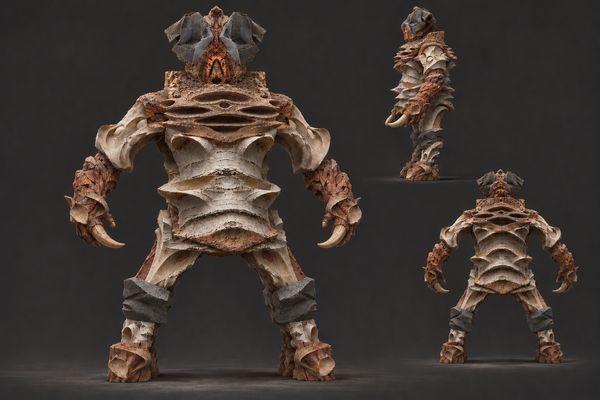
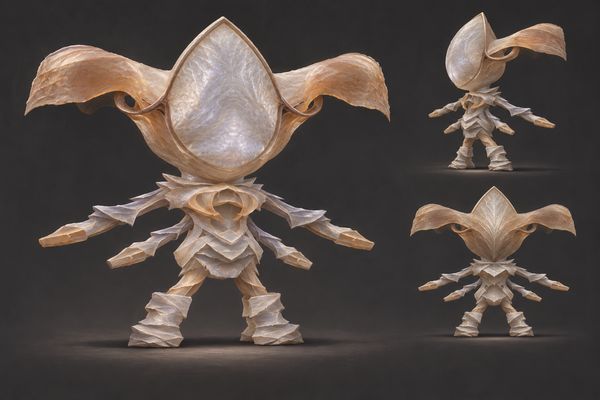
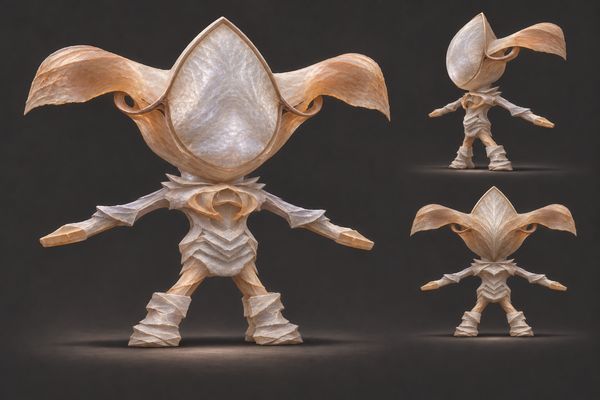
That meant pushing past faces and surface details to the thing that makes a silhouette: how big the head is next to the body, where the sensors sit, how long the limbs run, how a figure takes up space.
The workbench gives you the material, and its Design lens lets you mark the head, body, limbs and details of a collage, lock the pieces you love and compare branches side by side. For these studies we took the next step. We used earlier collages as visual references and had the paint made directly with AI image generation, then pushed the proportions much further: compact figures with enormous heads, towering long-limbed ones, broad many-armed ones.
There was no formula for an iconic character. The point was a wide range of possibilities, then seeing which ones felt distinctive, expressive and right for the story.
Where the bodies start
The creatures here began as raw, mirrored collages like these two. The paint keeps the material and changes everything else. Abigail and Kellen are people, so they skip the collage.
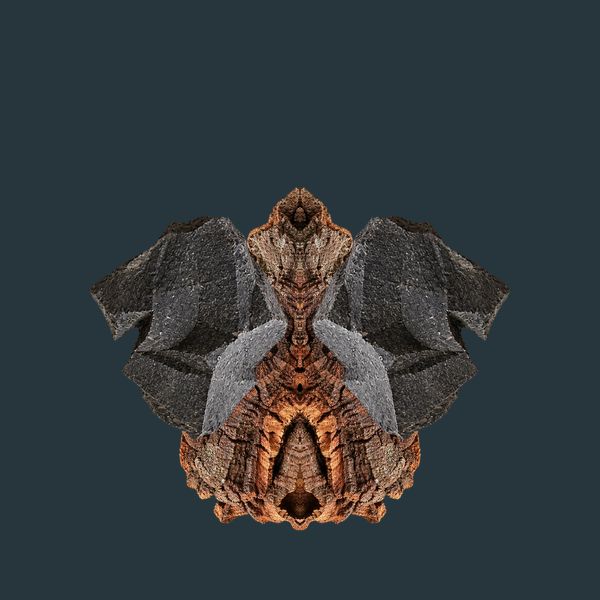
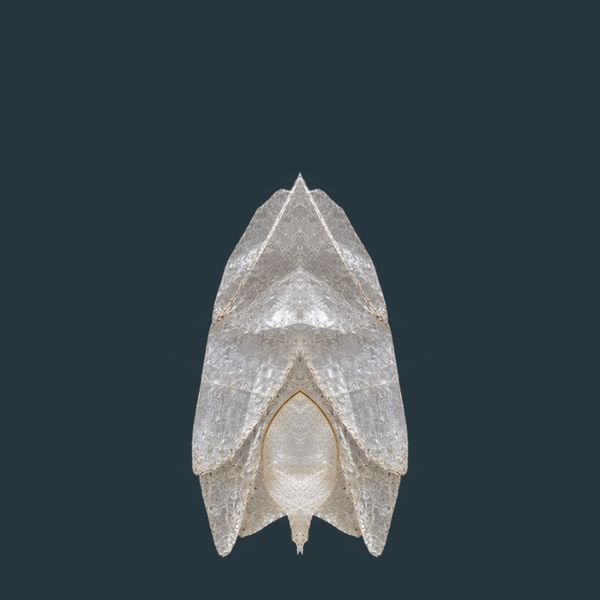
Lio
Abigail
Tukkar
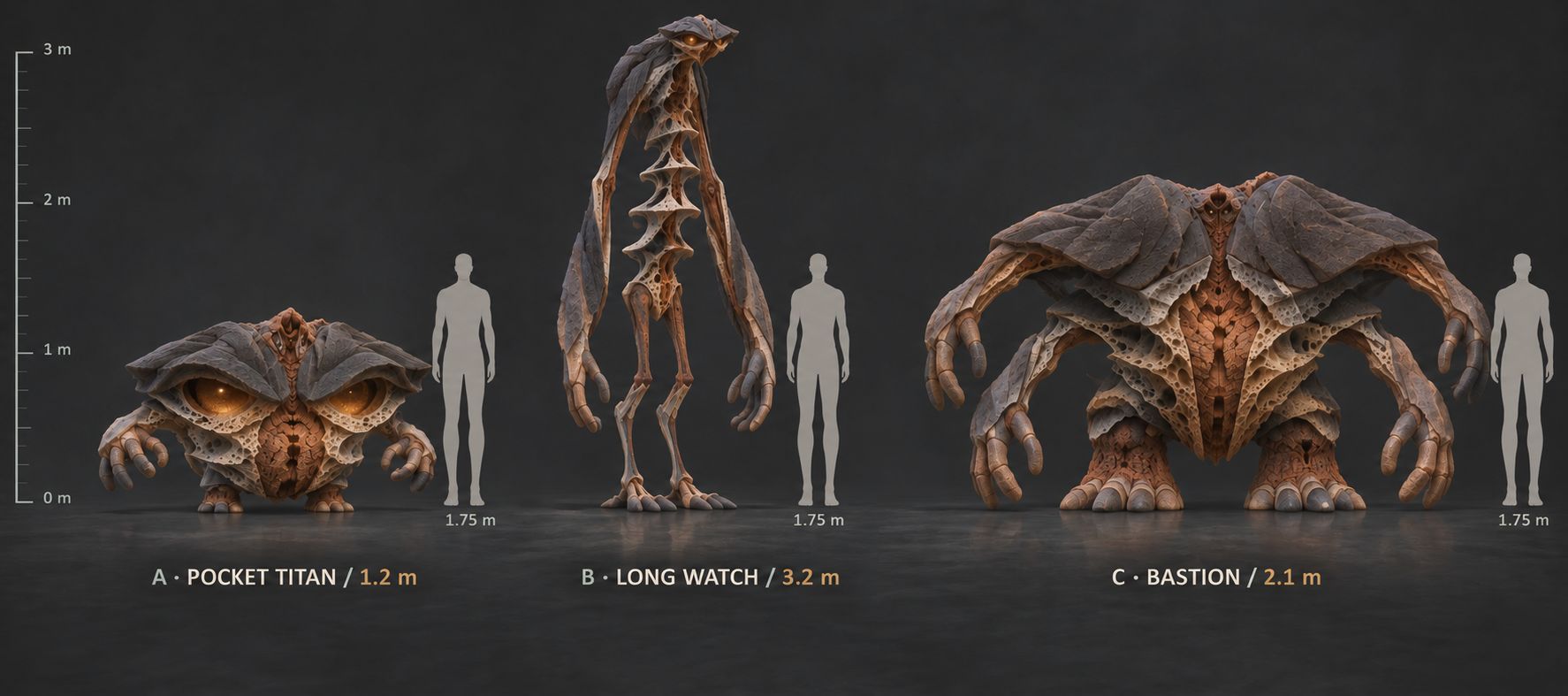
Tukkar
Nym
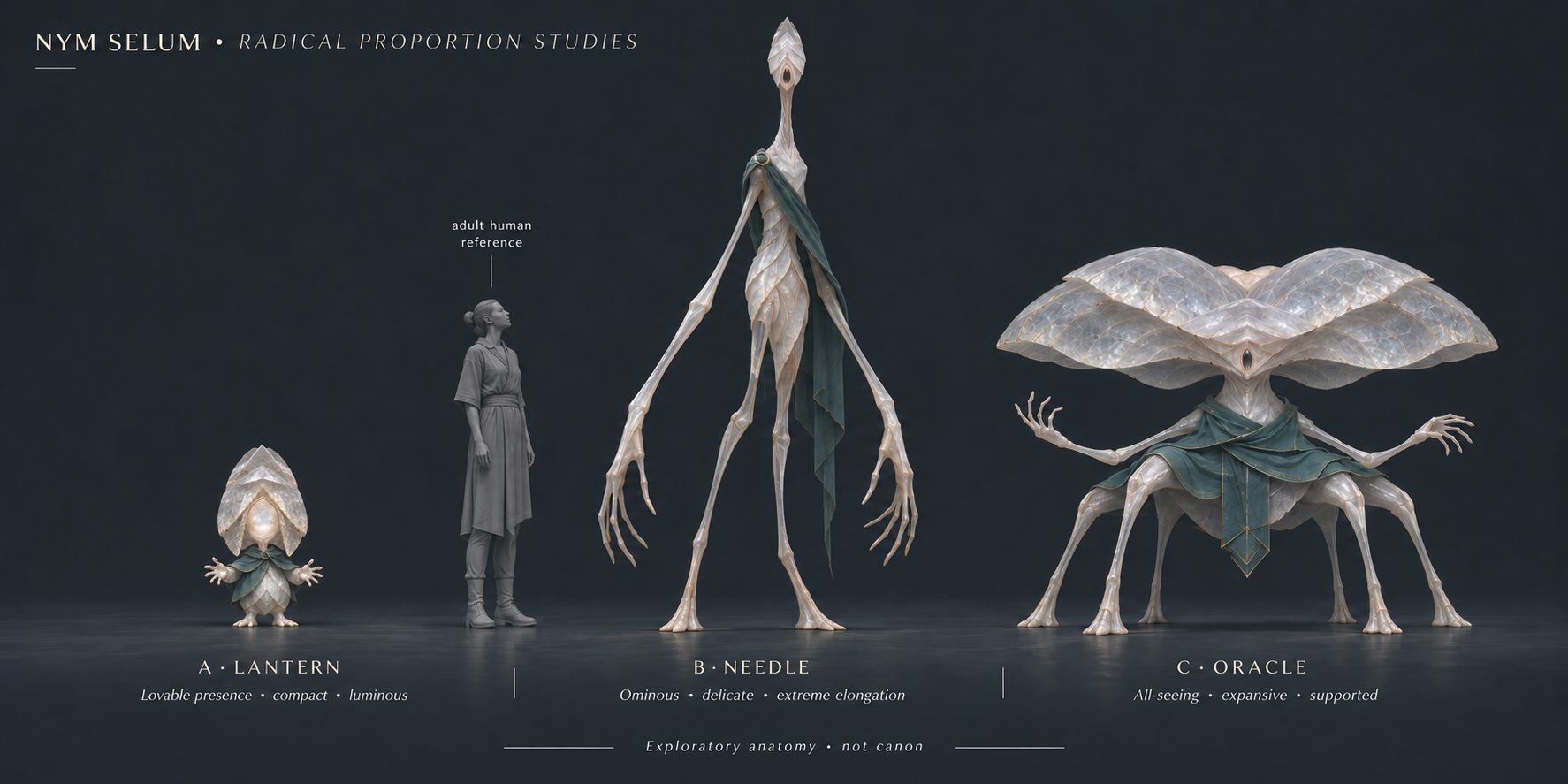
Nym
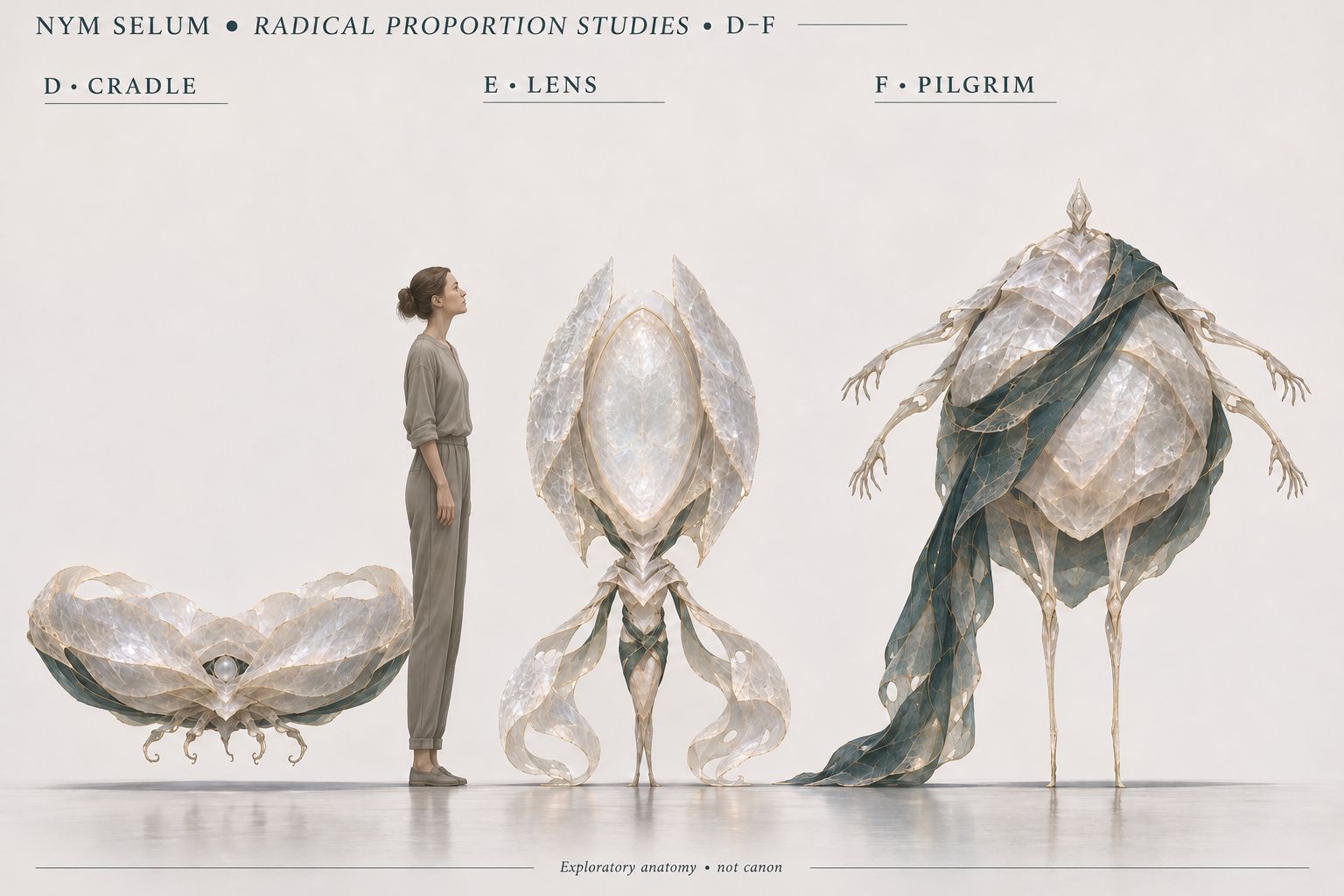
Vesk
Kellen
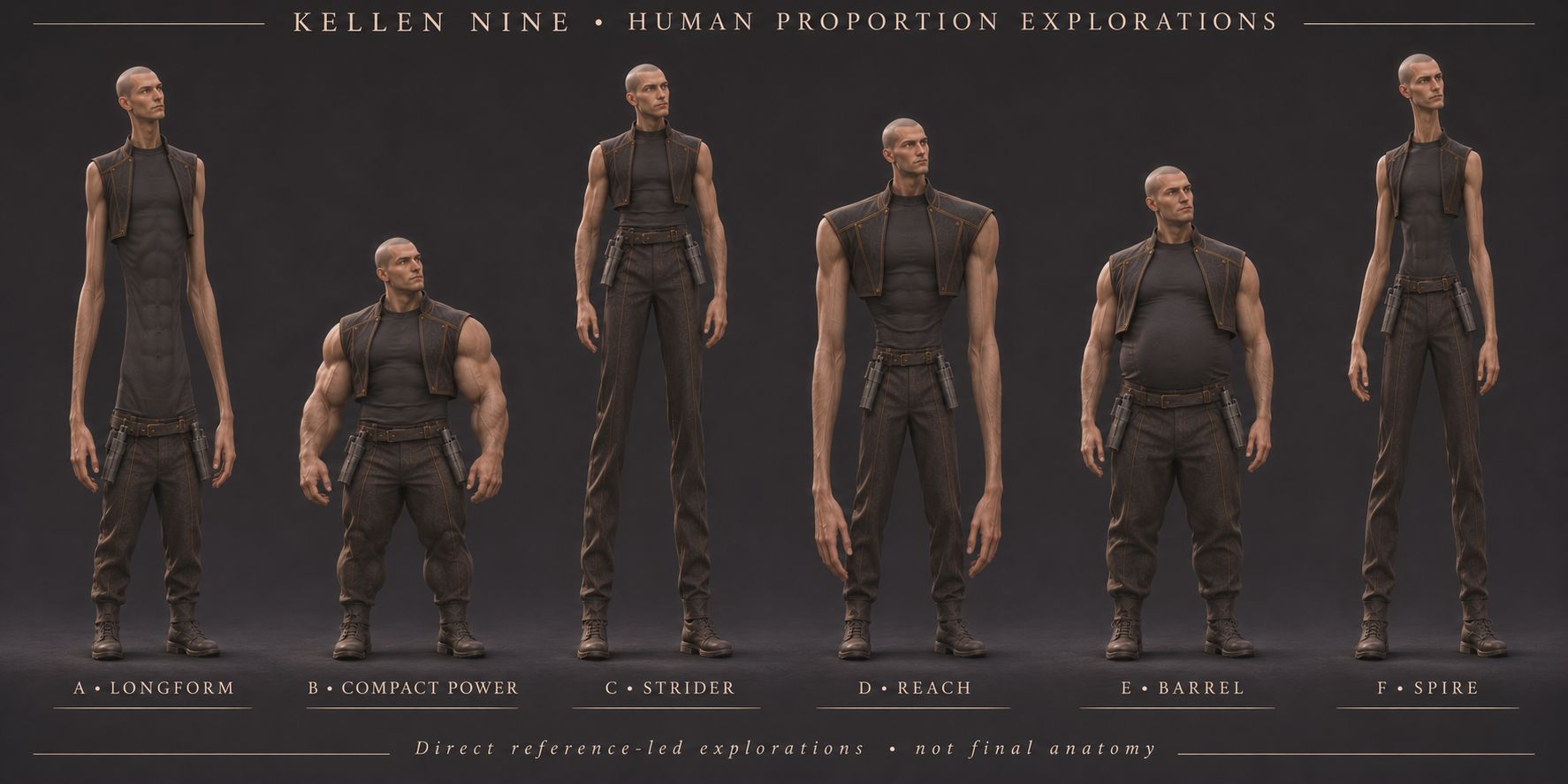
Kellen
And the other peoples
The same idea, pushed across every people in the galaxy: six possible individuals each, from a tiny glowing blob to a ship with a mind of its own.
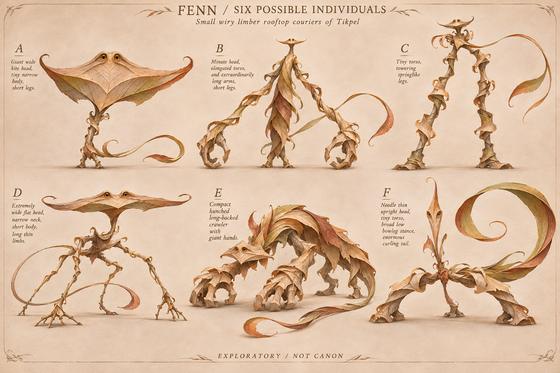
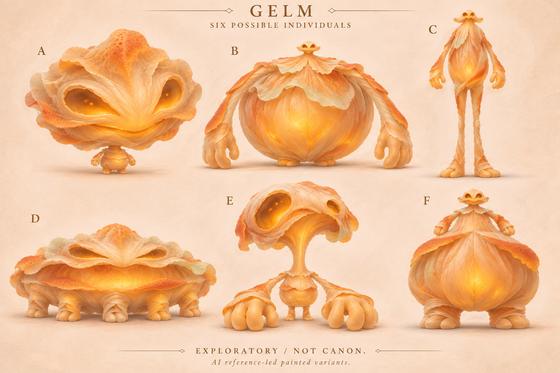
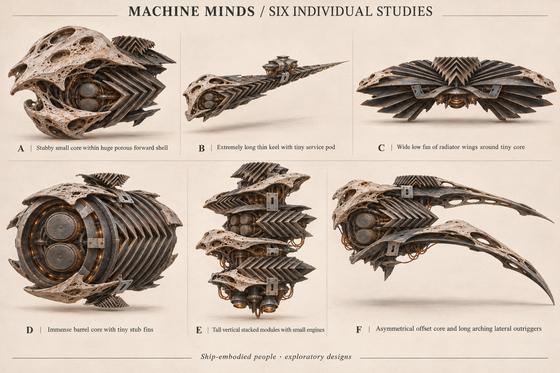
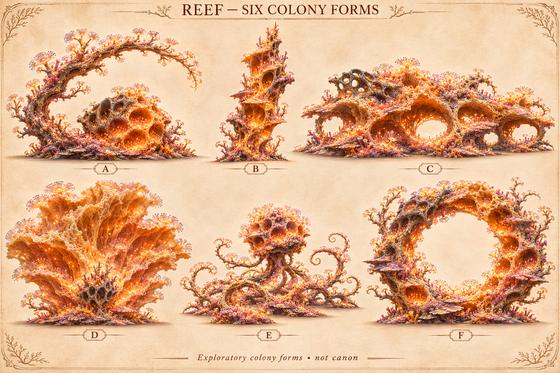
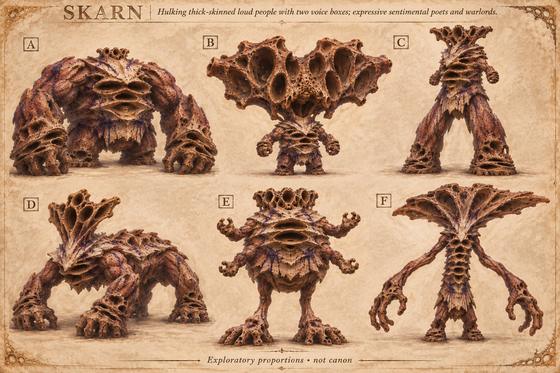
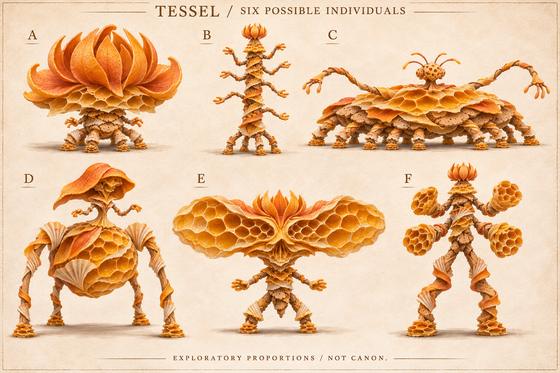
These are explorations, not final designs. Some may join the core ensemble. Others might turn out to be different characters, or different species, elsewhere in the universe. For me that’s the exciting part: discovering a form I wouldn’t have thought to draw, then finding out who or what it might become.
Rendering styles
Same lunch, seven ways
One scene from Hunt 31, Abigail's lunch relay on Stair Nine, painted in every style we've tried. Animation is the favorite so far. Nothing's locked.
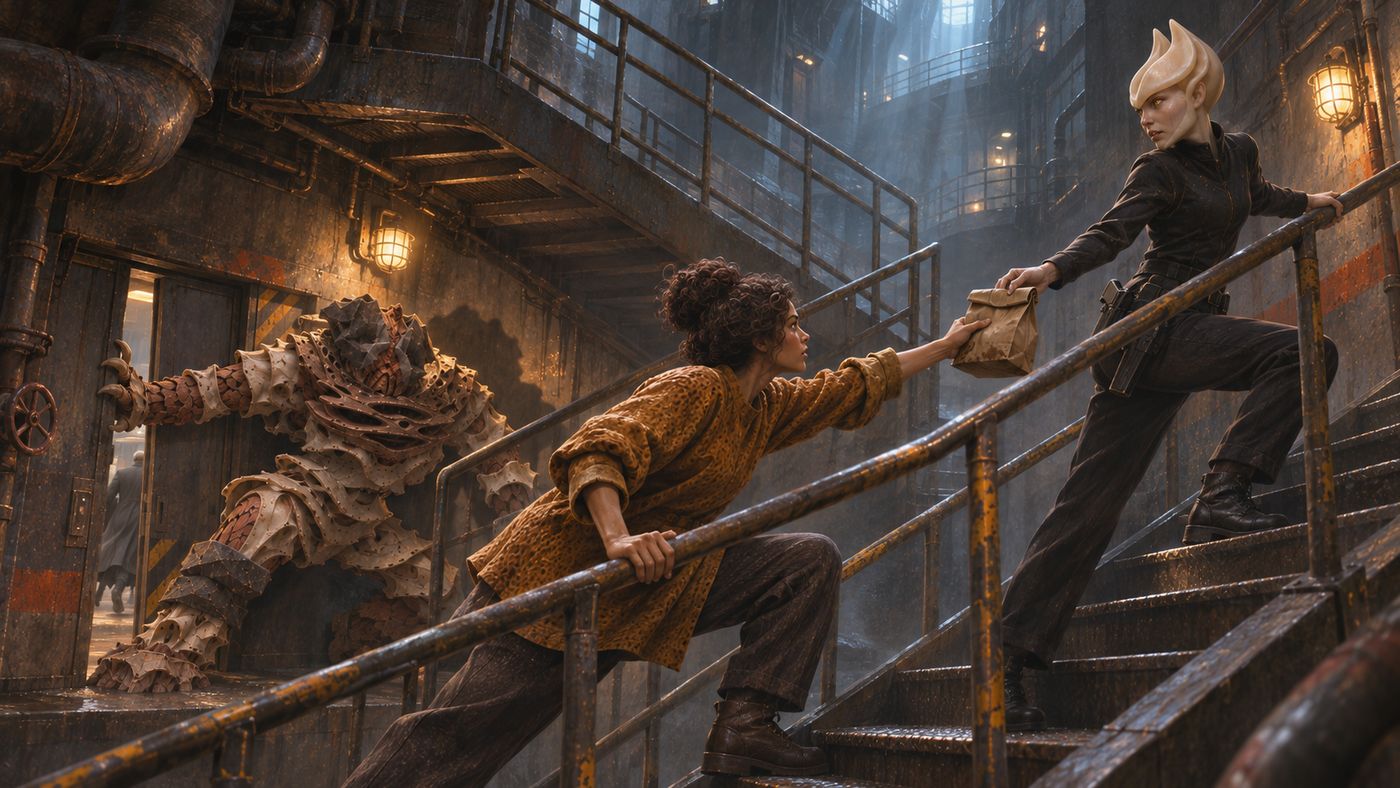
Cinematic Sci-fi. Grounded material surfaces, atmospheric depth and cinematic light. Fine surface detail and smoothly modeled form. Where we started.
Raw shapes
Heads we keep coming back to
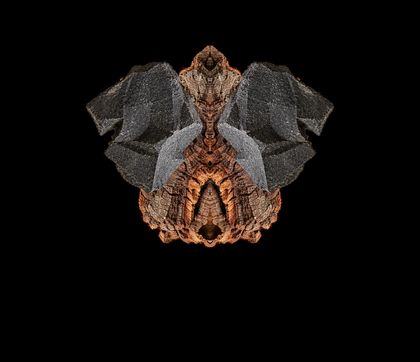
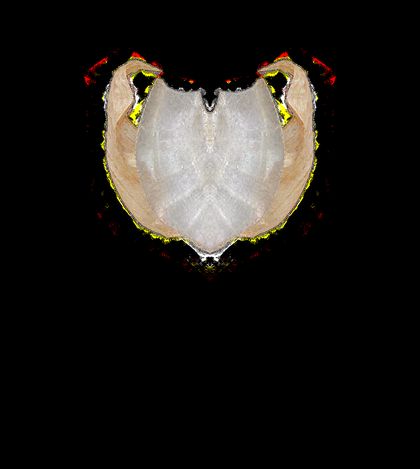
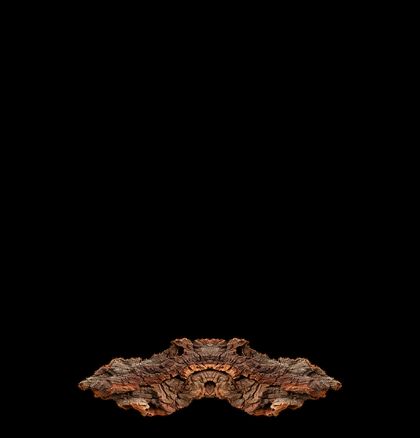
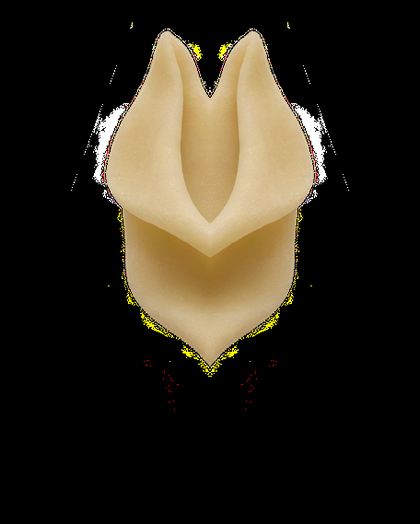
Before anybody gets painted, there's a raw shape. These are some of the head studies I marked as favorites for the crew. None of them is final.
Nothing gets thrown away
Earlier passes
We keep every reject. A body that's wrong for one people might be right for another, or for a ship, or for something on a market stall in Belo.
All the art on these pages is development art. The designs are still in review, and in a few places the pictures and the words don't agree yet.