Why I tried this
I've been curious about new technology my whole career, and about the new ways of telling stories that come with it. When the new AI platforms showed up, I wanted to know what they could really do, so I started experimenting. A lot of what's on this site came out of that curiosity: games, audiobooks, concept albums, browser adventures.
These screenplays are one of those experiments, and I want to be clear about what they are. I didn't write them the way I've written scripts in the past, and I'm not passing them off as my original work. Claude wrote the pages. My job was closer to a non-writing producer's: I brought the stories, made the calls and gave the notes.
Out of the drawer
Every scribbler has a drawer. Mine is a folder of pitches, bibles and outlines for projects that never went forward. A buyer passes, a slate changes, and a story you love goes in the drawer.
This fall I opened it with Claude, Anthropic's AI model, as my scribbling partner. The goal was simple: take three of those stories all the way to finished feature screenplays, and see how far the two of us could get.
What we started with
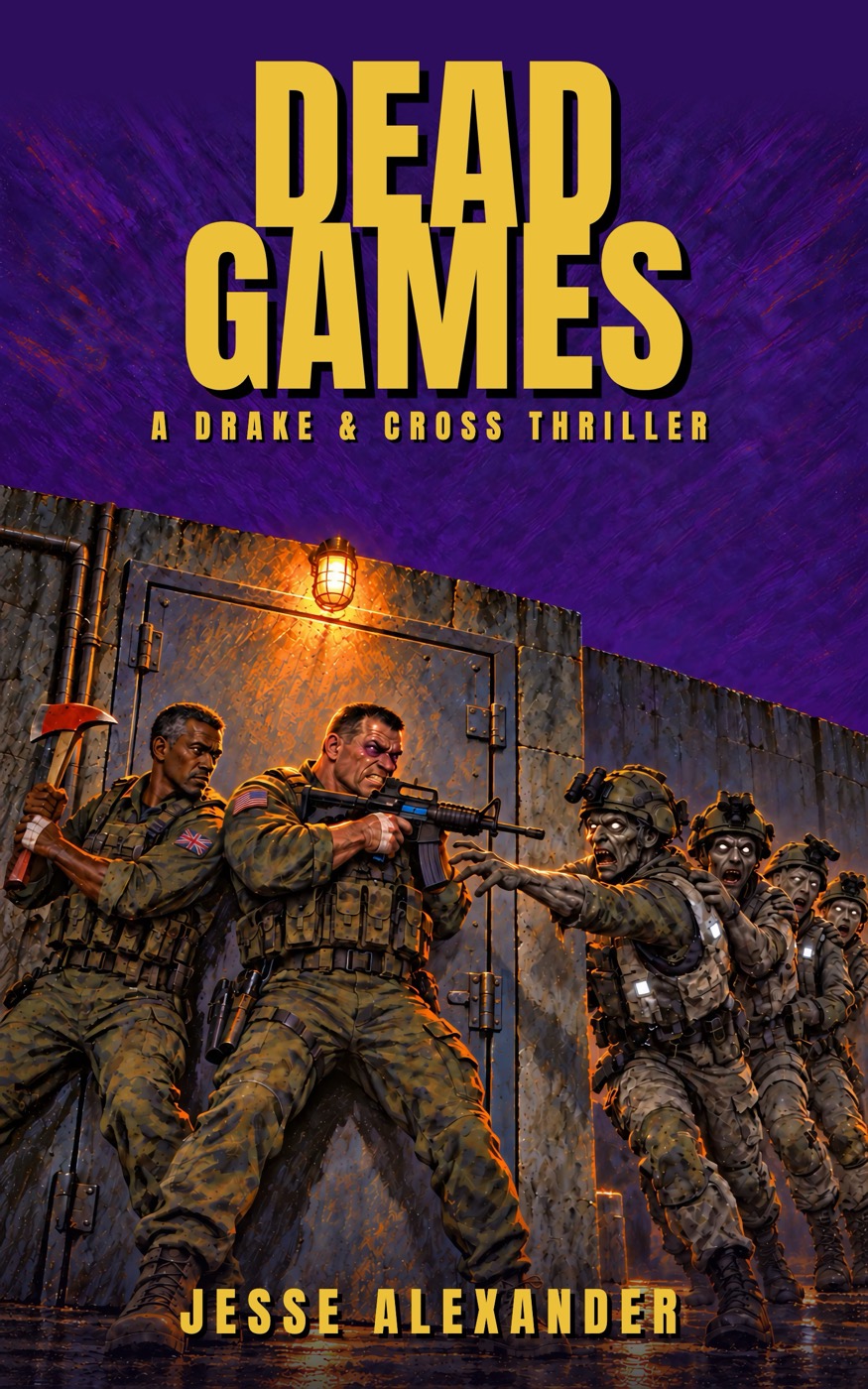
- DEAD GAMESStarted as a series I pitched about private military contractors. It turned into a movie script, then a novel where the war game goes very wrong, then this.
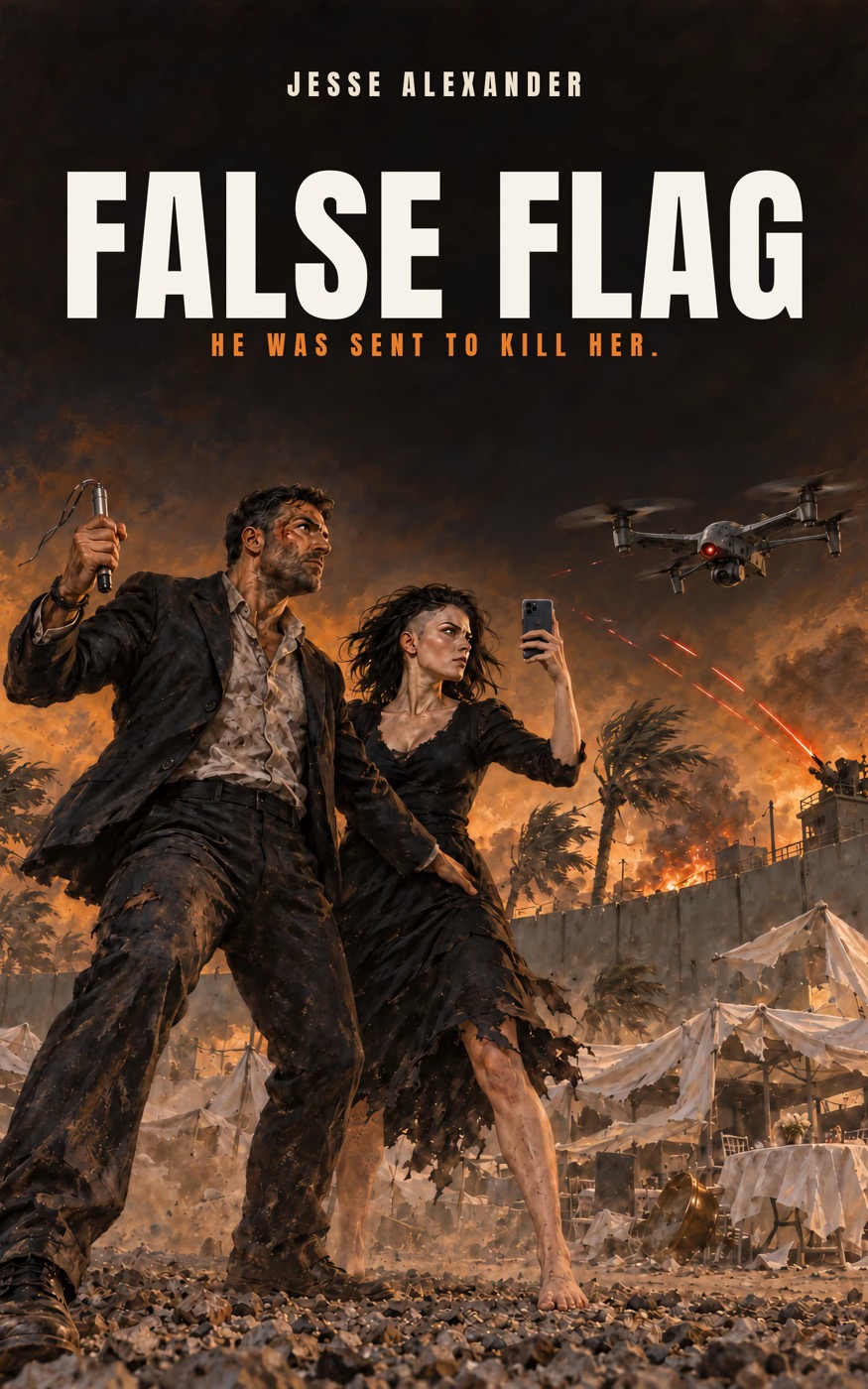
- FALSE FLAGSeven development documents from the summer of 2024, holding six different versions of the story. Claude laid them side by side and I picked the one I liked best: a CIA cleaner and the journalist he's sent to kill.
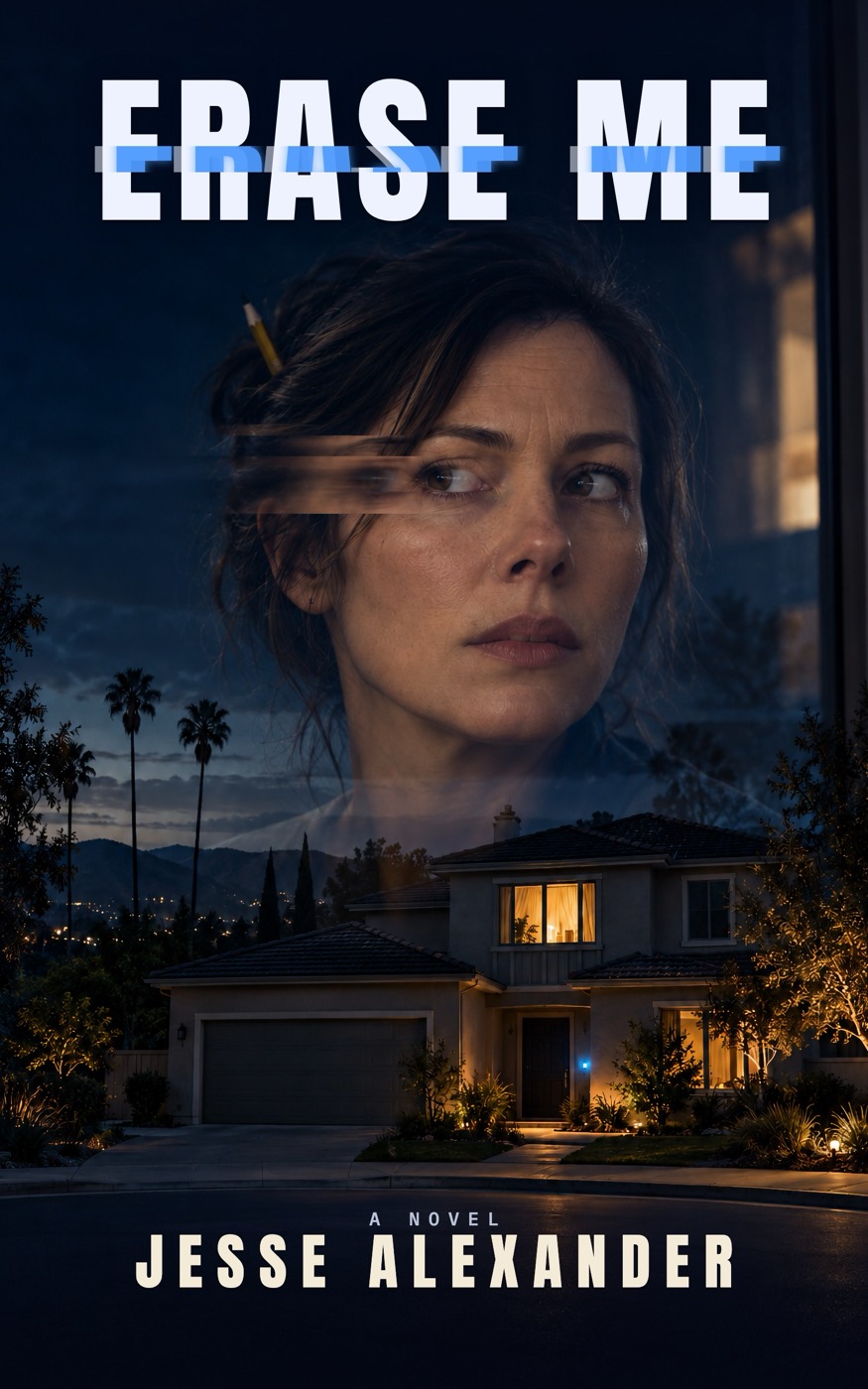
- ERASE MEA development doc from February 2025 and a page of notes from that May. A mother named Mara, an AI twist, and a lot of questions I hadn't answered yet. It began as a movie outline, became a novel, and came back as a script.
Years of notes, turned into tools
For years I've been putting what I've learned as a scribbler into my Scribbler's Toolbox: craft notes, worksheets, the lessons from my courses, and the things I had to learn the hard way.
Before we wrote a page, Claude and I turned that toolbox into a set of skills. Each one is a working method Claude can run on a draft. Story structure, built on my Modular Story Method. Dialogue. Action set pieces. Two-handers, for stories about two partners who can't stand each other. Haecceity, the one specific detail that makes a world feel real. And a TLDR pass that tightens the action lines.
Every draft went through those skills. When a scene felt flat, we ran the tool built for that problem.
The craft underneath all of it comes from my own courses, Scribbler's Playbook and Filmmaking 101, which live on this site.
How the work went
Claude reads everything first. Pitches, bibles, outlines, scraps. It sorts what I'd already decided from what I hadn't, and every open question comes back to me as a list of options. I pick one. Every pick goes in a rulings file, and nothing gets to overrule it later. ERASE ME's file runs past a hundred rulings.
The book comes before the script. Each story became a novel first. A novel makes you know everything: the map, the clocks, who knew what and when. Once the book worked, the script had a spine to stand on.
Then the outline, then the draft. Claude broke each novel into a scene outline with a page budget, then drafted one Reel at a time against a brief full of my rules. The first drafts ran long. Very long.
Pages
| Script | First draft | Now | Pages cut |
|---|
| DEAD GAMES | 177 | 127 | 50 |
|---|
| FALSE FLAG | 293 | 136 | 157 |
|---|
| ERASE ME | 205 | 127 | 78 |
|---|
Cutting is the job. Each script went through rounds of cuts with a hard page target, and every cut list got checked against the story threads so nothing load-bearing fell out.
Readers, and then more readers
Every draft went to a panel of simulated readers, each with one job. A continuity reader. A laugh audit. A voice read. A cold buyer who has never heard of me. And a dialogue-only reader, because some folks read only the dialogue, so the plot has to live there.
Readers are wrong sometimes. Every note got checked against the page before anything changed, and no reader gets to reverse one of my calls. After about three rounds the simulated panels stop finding much. That's when you need real people: readers and fellow scribblers. Which is where you come in.
Making it sound like me
Claude doesn't sound like me out of the box. So we built a voice and style guide from five of my unsold screenplays and three of my pitches. Claude measured all of it: how long my sentences run, how often the narrator weighs in, how I introduce a character, how short my dialogue gets, the brands and songs and food my people carry around.
Then the drafts got measured against the guide. I read pages, marked them up, and locked a sample. The rest of each script got passed against that sample.
A few house rules
- No similes in the action lines.
- Nothing gets compared to the weather.
- No em dashes.
- Nobody says “zombie.”
- No joke gets told twice.
- Nothing that matters happens over a radio. Put it on screen.
- The plot has to survive a read of the dialogue alone.
The Guild's rules on AI
The Writers Guild of America has a clear position on AI, and it's written into the Guild's contract with the studios. It came out of the 2023 strike. The 2026 contract, which runs through 2030, keeps all of it.
The short version. In the Guild's words, AI isn't a writer. Anything an AI produces doesn't count as literary material, so it can't earn a writing credit, and a studio can't hand a scribbler an AI draft and pay for the job as a rewrite. A scribbler can choose to use AI, with the company's consent. A studio can't make anyone use it, and it has to say so when material it hands over was made by AI. The Guild also reserves the right to say that training AI on our scripts is prohibited, and under the 2026 contract a studio has to tell the Guild when it licenses our work to train a commercial AI.
Those rules cover scribblers working for the studios, and these three are experiments I made on my own. By the Guild's definition AI isn't a writer, so I'm calling these what they are: scripts Claude wrote from my stories, with me producing. That's also why the title pages say “written by Jesse Alexander”: under the Guild's rules, AI can't take a writing credit.
All three screenplays are registered with the Writers Guild of America. The Guild's own summary of its AI rules is on its site.
Who did what
Claude did the typing. My job was the producer's job, making the calls: what the story is, who lives, what got cut, which jokes stay, and what sounds like me. These are the drafts as they stand in October 2026.
They're reading copies. Read them here, or take the PDF. Please don't repost them.
How I work with AI across the rest of the site is on its own page.
Jesse Alexander